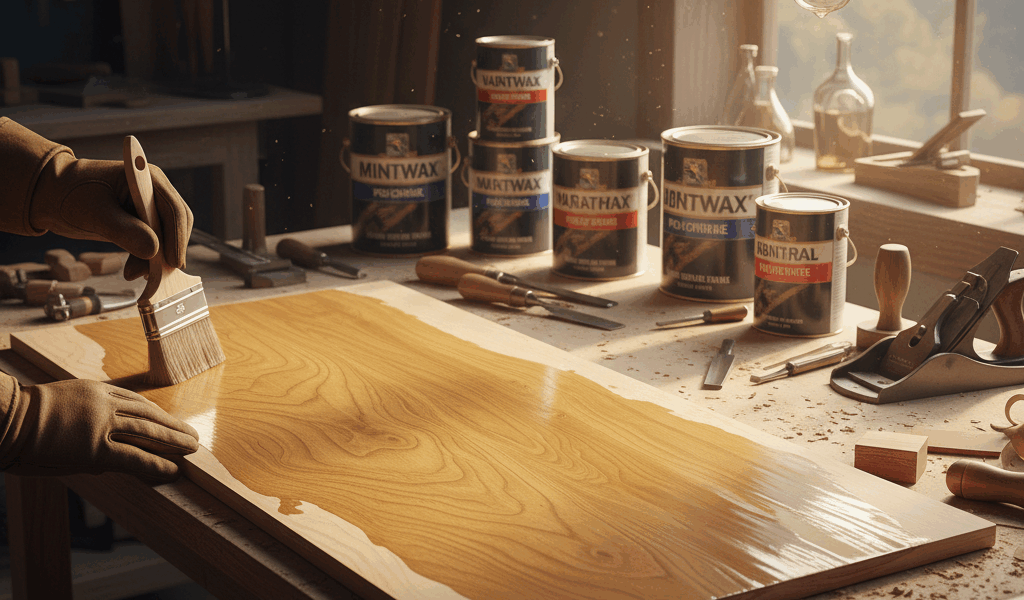
The best polyurethane is the exact product rated for your project—not one universal brand. For light-colored indoor furniture, a clear water-based topcoat usually minimizes ambering and shortens recoat time. For a warmer tone and longer open time, consider an oil-based interior polyurethane. Floors need a floor-rated product; exterior wood needs an exterior-rated coating with weather and UV claims. Cutting surfaces, toys, and food-contact items require separate label review.
Read the current container label and Safety Data Sheet before buying. Products sold under “polyurethane,” “urethane,” “water-based topcoat,” and “oil-modified” names can differ in resin, solvent, intended use, application method, recoat window, and cure time.
Best polyurethane by project
| Project | Good starting category | What to verify on the label |
|---|---|---|
| Maple, ash, birch, or white-painted furniture | Clear water-based interior topcoat | Color clarity, compatibility with stain/paint, required coats |
| Oak, walnut, or projects where warmth is wanted | Oil-based interior polyurethane or an approved oil-modified formula | Ambering, ventilation, recoat and cure time |
| Dining or coffee table | Interior product rated for furniture/tabletops | Water, alcohol, household-chemical, heat, and scratch limitations |
| Wood floor or stair tread | Floor-rated polyurethane system | Floor approval, abrasion rating, walk-on and furniture-return times |
| Exterior door or outdoor furniture | Exterior-rated spar urethane or exterior coating | Exterior use, UV/weather resistance, maintenance interval |
| Vertical trim or cabinet side | Label-approved brush, wipe, or spray formula suited to vertical work | Recommended film thickness, sag control, application method |
| Cutting board or butcher-block cutting surface | Finish specifically suitable for that intended use | Food-contact statement, cure requirements, knife-damage and repair guidance |
Water-based vs oil-based polyurethane
Choose water-based when color clarity matters
Water-based topcoats generally add less amber color than conventional oil-based polyurethane. That makes them useful on pale woods and light paint. They commonly have shorter dry and recoat times and clean up with water while wet when the label permits.
“Water-based” does not mean harmless, zero-VOC, food-safe, or safe to spray without controls. These products can contain coalescing solvents and other ingredients that irritate eyes, skin, or the respiratory system. Use the label and SDS—not odor—as the safety standard.
Choose oil-based when warmth and longer working time fit the project
Oil-based polyurethane usually adds amber warmth and gives the applicator more open time to maintain a wet edge. It often requires mineral-spirits cleanup, longer recoat and cure intervals, and stronger ventilation and fire controls.
It is inaccurate to say oil-based is always more durable than every modern water-based product. Durability depends on the actual formulation, film thickness, adhesion, cure, substrate, exposure, and whether the product is rated for the use. A floor-rated water-based system can be a better floor finish than an interior oil-based furniture product that excludes floors.
What about water-based oil-modified products?
Water-based oil-modified polyurethane is a separate category that attempts to combine water cleanup and quicker recoating with some of the appearance or performance associated with oil-modified resin. Do not infer its color, floor suitability, or cure schedule from the name. Read that product’s technical data sheet.
Three current product types to compare
These are examples of categories, not a claim that one brand wins every project:
- Minwax Fast-Drying Polyurethane is an oil-based interior protective finish. Confirm the current approved surfaces, sheen, application instructions, and restrictions on the label.
- Varathane Ultimate Oil-Based Polyurethane is another oil-based interior category option. “Self-leveling” marketing does not eliminate the need for correct film thickness, temperature, preparation, and technique.
- General Finishes High Performance Water Based Topcoat is a water-based topcoat with manufacturer-specific use and application guidance. Check its current warnings about exterior use, over-white appearance, and intended application.
Do not buy by brand reputation alone. Match the product number and current technical sheet to the surface, exposure, application equipment, and maintenance plan.
Floors need a floor-rated finish
“Durable furniture polyurethane” does not automatically mean suitable for floors. Floor coatings are evaluated and instructed for abrasion, large-area application, traffic, recoating, and return-to-service conditions. Use one manufacturer’s compatible preparation and coating system unless the technical department approves mixing products.
Observe separate times for recoating, light foot traffic, rugs, furniture, and full cure. Moving furniture onto a dry-to-touch film can imprint or damage it before cure.
Exterior wood needs an exterior label
Interior polyurethane can crack, peel, chalk, or degrade outdoors as wood moves and sunlight attacks the coating. Choose a product explicitly labeled for exterior exposure. Even exterior spar products require inspection and maintenance before the film fails.
Horizontal outdoor surfaces, standing water, ground contact, and constant sun are especially demanding. A film finish may not be the best maintenance strategy for every deck, bench, or planter.
Food-contact and cutting-board questions
Do not reduce food safety to “all finishes are safe once cured.” Suitability depends on the exact formulation, intended food contact, full cure under specified conditions, local regulations, and how the item will be used.
A film on a decorative serving board faces different wear than a cutting surface repeatedly scored by knives. Damage can trap moisture and make repair difficult. Use a finish whose manufacturer supports the intended contact, follow the complete cure schedule, and avoid unsupported “FDA approved” claims. For a commercial product or repeated food service, obtain appropriate regulatory and manufacturer guidance.
Compatibility with stain, paint, and existing finish
Adhesion failures often begin below the polyurethane. Stain, dye, paint, filler, shellac, or an old finish may contain wax, silicone, oil, or solvent that interferes with the new coat.
- Identify the substrate and existing finish if possible.
- Confirm the topcoat is approved over that product.
- Allow the undercoat to dry or cure for the required interval.
- Prepare and sand only as directed.
- Test the complete schedule on scrap or a hidden area.
A stain that feels dry can still release solvent into a topcoat. Cold temperature, high humidity, heavy application, and limited airflow can extend every published time.
Brush, wipe, or spray?
Use only an application method the product supports. Brushing can build film efficiently. Wipe-on formulas apply thinner coats and usually require more coats. Spraying changes inhalation and fire hazards because it creates airborne droplets and potentially flammable vapor.
Do not thin a finish unless the current label permits it and specifies the thinner and amount. Unapproved thinning can alter VOC compliance, dry time, sagging, film build, and performance. Our brush versus wipe-on guide explains the workflow differences.
Surface preparation and between-coat sanding
There is no universal “always sand with 320 grit” rule. The correct sequence depends on the product, substrate, time between coats, and whether the goal is adhesion or removing dust nibs. Follow the label’s grit and recoat-window instructions.
Remove sanding dust with a method compatible with the finish. A solvent-damp rag, water-damp cloth, commercial tack cloth, or compressed air can each create problems in the wrong system. Test first and avoid contaminating the surface.
Application conditions
Temperature, humidity, airflow, and dust affect leveling and cure. Work inside the manufacturer’s range. Direct sun, a hot surface, strong airflow, or a cold shop can cause lap marks, bubbles, skinning, slow cure, or trapped solvent.
Stirring rather than shaking often reduces bubbles, but follow the specific label—especially for flattening agents in satin or matte sheens. Mix gently and consistently so the sheen does not vary from top to bottom of the can.
Safety: ventilation, respirators, and fire
Use ventilation and personal protective equipment specified by the label and SDS. An N95 filtering facepiece is for particles; it does not protect against organic solvent vapor. A cartridge respirator is not a generic substitute for ventilation and must be selected, fitted, maintained, and used with the correct cartridges and change schedule.
Keep coatings and vapors away from flames, pilot lights, sparks, heaters, smoking, and other ignition sources. Do not spray flammable coatings in an improvised enclosed space.
Oil- or finish-soaked rags can heat through oxidation and ignite. Follow the coating label and local fire/waste authority’s disposal method. Do not leave wet rags crumpled, stacked, in a pocket, or in ordinary trash. If the manufacturer directs flat drying, use a secure noncombustible outdoor location away from buildings and ignition; if it directs an approved closed metal container, use that method. Local hazardous-waste rules still apply.
Dry time is not cure time
A finish can be dry to touch, ready to recoat, ready for light handling, and fully cured at four different times. Heavy objects, rubber feet, rugs, cleaners, alcohol, water, or heat can mark a film that feels dry but has not cured.
Use the current label’s times as minimums under stated conditions, then extend them when coats are heavy or conditions are cool, humid, or poorly ventilated.
When polyurethane is the wrong finish
- Easy spot repair is the priority: shellac, oil, wax, or another repairable system may suit the project better.
- Constant exterior movement and sun: use an exterior maintenance system designed for the exposure.
- A natural, low-build feel is desired: an oil or hard-wax product may fit, subject to its own limitations.
- Production spraying and fast burn-in repairs matter: lacquer may be appropriate with professional ventilation and fire controls. See our lacquer versus polyurethane guide.
- The surface will be cut directly with knives: choose and maintain a finish specifically suitable for the use.
Bottom line
For indoor pale wood, start by comparing clear water-based products. For a warmer look and longer open time, compare oil-based interior products. Use floor-rated coatings on floors and exterior-rated coatings outdoors. Then let the exact label decide compatibility, coats, sanding, ventilation, cleanup, fire precautions, recoat time, and full cure.
The best polyurethane is not the product with the strongest generic durability claim. It is the one explicitly designed for the surface and exposure, applied as a tested system, and allowed to cure safely.


Stay in the loop
Get the latest crafted wood creations updates delivered to your inbox.