Pocket hole joinery has gotten misunderstood with all the Kreg jig debates and structural arguments flying around. As a woodworker who has used pocket holes on hundreds of projects — from face frames to furniture to shop fixtures — I’ve learned where they shine and where they don’t. Today, I’ll share everything I know about pocket holes.
What Exactly Are Pocket Holes?
Pocket holes are drilled at an angle to join two pieces of wood together with a self-tapping screw. The result is a clean, nearly invisible joint with no visible screws on the surface. The simplicity is exactly the point: strong, fast, clean joints without mortises or dowels or biscuits.

A Brief History
Pocket hole joinery dates back to European carpenters in the late 1940s who found that drilling angled holes into timber produced a robust joint without expensive equipment. The technique stayed mostly in professional shops until modern pocket hole jigs made it fast and repeatable for everyone. Now it’s one of the most widely used methods in cabinet and furniture making.
Why Use Pocket Holes?
- Speed and strength. Pocket holes create strong joints quickly. The screw drives the joint tight and holds it — no waiting for glue to cure, no clamp-up complexity on face frames or cabinet boxes.
- Clean appearance. No visible screws means finished work that looks intentional and professional. The pocket is hidden on the back or inside face of the joint.
- Versatility. Tables, shelves, cabinets, face frames, bed frames — if it involves wood joinery, pocket holes are at least worth considering.
How to Make Pocket Holes
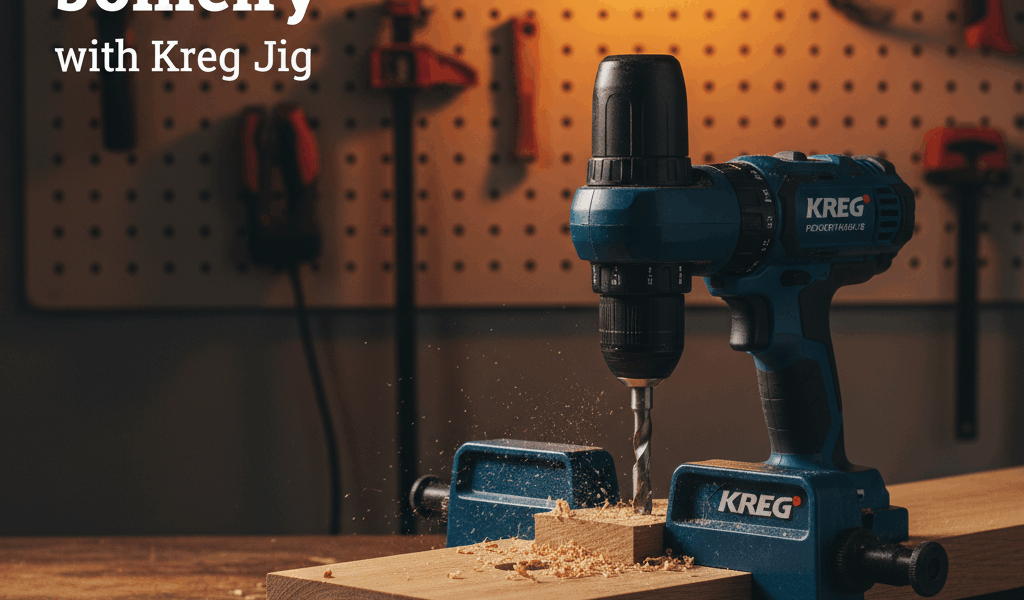
Set the drill bit depth collar to match your workpiece thickness — this controls how far the jig drills and determines the pocket angle. Clamp the jig to your workpiece, drill the pocket, then drive a self-tapping pocket hole screw to pull the joint tight. I’m apparently a “drill the pocket, glue the joint, then screw” person and that combination always works better for me while relying on the screw alone without glue never does on joints that matter.
Important Pocket Hole Considerations
Screw placement matters. Drive pocket screws into edge grain or face grain for maximum holding power. Driving into end grain significantly reduces the holding strength — end grain is like driving a screw into a bundle of straws. It works, but it won’t match what you get in face or edge grain.
Balance pocket hole placement carefully. Too many holes in a narrow piece can weaken the wood rather than reinforce the joint. The goal is adequate connection, not maximum hole count.
One Final Thought
Pocket holes are an invaluable joinery method when used appropriately. Their speed, strength, and clean appearance make them a genuine first choice for face frames, cabinet boxes, and furniture assembly. Understand the grain direction rules, use glue alongside the screws on structural joints, and don’t overdrill narrow stock. That’s what makes pocket holes endearing to woodworkers — they’re genuinely useful without demanding a lot of setup or specialized skill.
Recommended Woodworking Tools
HURRICANE 4-Piece Wood Chisel Set – $13.99
CR-V steel beveled edge blades for precision carving.
GREBSTK 4-Piece Wood Chisel Set – $13.98
Sharp bevel edge bench chisels for woodworking.
As an Amazon Associate, we earn from qualifying purchases.