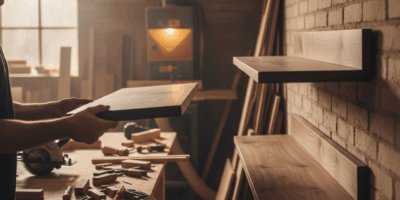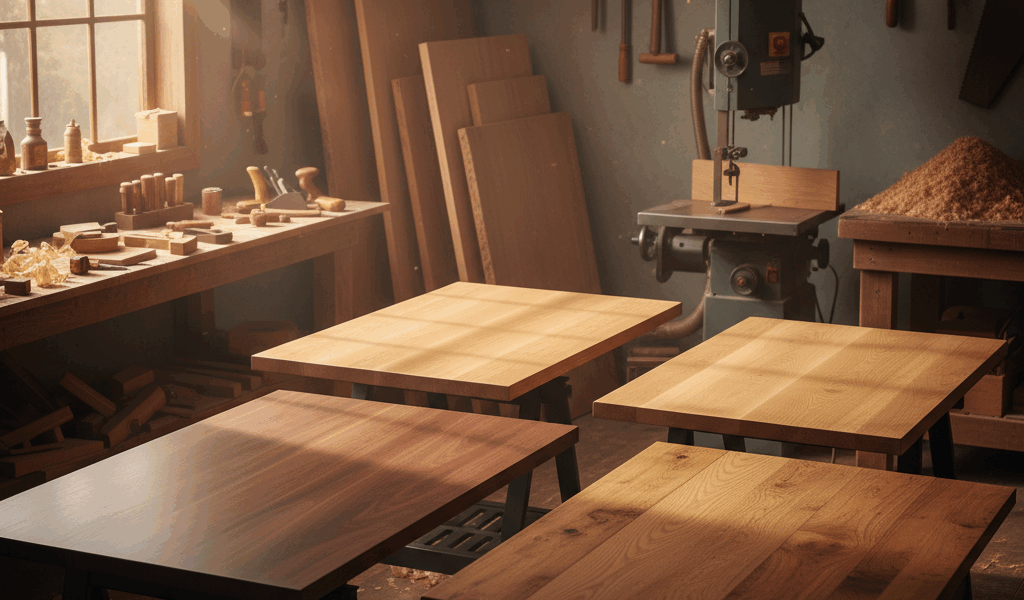
Desk surfaces have gotten a wide range of material options with all the standing desk components and laminate alternatives flying around. As a woodworker who has built solid wood desks for both my own shop and for clients, I keep coming back to wood because the material has qualities that nothing synthetic replicates. Today, I’ll share why wood desk tops earn their place, and what to know about working with them.

The Species Question
Hardwoods dominate the desk top market for good reason: oak, maple, walnut, and cherry all bring distinct character and real durability to a daily-use surface. Oak’s pronounced grain makes each piece visually distinctive. Walnut’s rich, dark tone creates a desk that feels intentionally designed rather than assembled. Maple’s pale, fine grain handles the harder use of a working desk better than most. Cherry’s reddish-brown deepens with age — a piece of cherry furniture becomes more beautiful over decades rather than less.
What Wood Brings That Synthetics Don’t
The working surface of a wood desk feels different from plastic laminate — the thermal mass, the subtle texture, the way it responds to tools and materials — in ways that are hard to describe but easy to notice after time at both. Beyond feel, the repairability is a genuine functional advantage: a scratched or dented wood surface can be sanded and refinished; a scratched laminate gets replaced.
The grain and texture tell a story through the piece’s life. A desk that develops a patina from use is an asset; a laminate desk that shows wear is damaged. That difference in how aging works is one of the most compelling practical arguments for solid wood furniture.
Keeping a Wood Desk Top in Good Shape
Regular light dusting and periodic wipe-down with a barely damp cloth is all most wood desk tops need day-to-day. Use coasters, desk pads, and mouse pads to protect the surface from water rings and repeated abrasion. Avoid direct, prolonged sunlight which degrades both the wood and the finish over time. I’m apparently a “desk pad for the keyboard area, bare wood for everything else” person and that approach always works better for me while trying to protect the whole surface with a full desk mat never does — the wood deserves to be seen.
The DIY Option
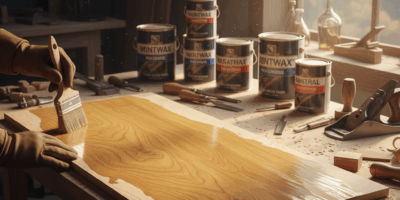
Building a desk top is one of the more satisfying projects a woodworker can tackle for a home office. Sand the surface progressively from 80 to 220 grit. Apply a quality primer if painting, or a wood conditioner followed by stain if you’re going that direction. Finish with at least two topcoats of a durable surface finish — polyurethane or a hardwax oil work well for daily-use desk surfaces. Let each coat cure fully before the next, and the result will outlast anything you’d buy at retail.
Reclaimed Wood
Reclaimed wood desk tops carry a character that new-growth wood simply doesn’t have — weathered grain, nail holes, checking marks, and color variation that developed over a century or more in another application. The sustainability case is straightforward: using material that already exists rather than cutting new trees. For a desk top, reclaimed wood often produces the most visually distinctive result of any option.
One Final Thought
A wood desk top is one of the pieces of furniture that rewards daily contact. Choose a species that suits your aesthetic and use intensity, maintain the finish, and you’ll have a workspace surface that improves with age rather than wearing out. That’s what makes solid wood endearing to woodworkers who know the material well — it’s honest, it’s repairable, and it gets better the longer you live with it.