Danish Oil vs Tung Oil: Drying Time and Protection
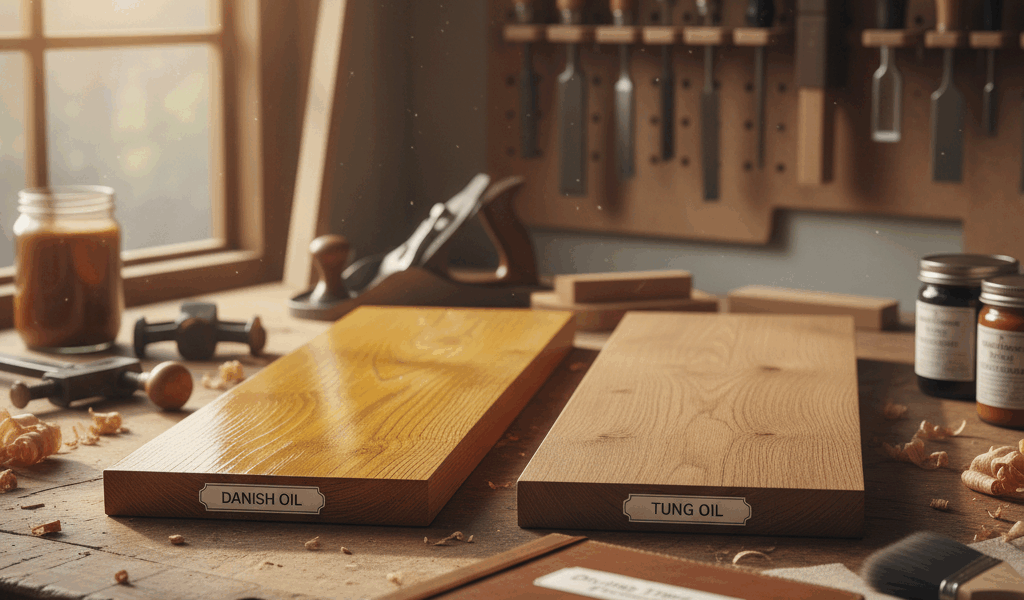
Danish oil and tung oil both create low-gloss, hand-rubbed finishes that highlight wood grain. They differ significantly in composition, drying time, and protective qualities. Understanding these differences helps you choose correctly for your project requirements.

Danish Oil Composition

Danish oil is a blend rather than a pure ingredient. Most formulas combine varnish, boiled linseed oil, and mineral spirits in varying ratios. The varnish provides surface protection, the linseed oil enhances penetration and color, and the mineral spirits thin the mixture for easy application.

Different manufacturers use different ratios, creating products with varying characteristics all labeled “Danish oil.” This inconsistency means results vary between brands even when following identical application procedures.

Pure Tung Oil Properties

Pure tung oil comes from pressed seeds of the tung tree. It contains no additives, varnish, or drying agents. The oil polymerizes when exposed to air, forming a protective film. This natural drying process takes substantially longer than oil-varnish blends.

Many products labeled “tung oil finish” are actually varnish blends similar to Danish oil but using tung oil instead of linseed oil as the base. Read the label carefully—ingredients listed as “polymerized tung oil” or containing metallic driers indicate a modified product rather than pure tung oil.

Drying Time Comparison

Danish oil dries for recoating in 4-8 hours depending on temperature, humidity, and coat thickness. You can typically apply three coats in a single day with early morning, midday, and evening applications. Complete curing takes 3-5 days before the surface can handle normal use.

Pure tung oil requires 24-48 hours between coats. The slow polymerization means waiting a full day before recoating, extending project timelines significantly. Complete cure takes 15-30 days depending on conditions. During this time, the finish remains somewhat soft and easily damaged.

Water Resistance

Danish oil provides moderate water resistance once fully cured. The varnish component creates a thin surface film that sheds water briefly. Extended water exposure will penetrate the finish and mark the wood. Use coasters and wipe up spills promptly.

Pure tung oil offers better water resistance than Danish oil after full cure. The cross-linked polymer structure repels water more effectively than oil-varnish blends. Chinese craftsmen have used tung oil for waterproofing wood boats, demonstrating its moisture protection capability.

Application Process

Both oils apply similarly: flood the surface, let soak for 15-20 minutes, then wipe away excess. The difference appears in drying time between coats and total coats needed.

Danish oil typically requires 2-3 coats for adequate protection. The varnish content builds faster than pure oil. Each coat adds noticeable protection.

Pure tung oil needs 4-6 coats minimum for equivalent protection. The lack of varnish means slower build-up. The extra coats and extended drying time make the total project time substantially longer.

Appearance Differences

Danish oil produces a subtle satin sheen after multiple coats. The varnish component creates slightly more surface build than pure oils. The finish enhances wood grain and adds amber warmth to the color.

Pure tung oil creates a flatter, more natural appearance. The finish sits more in the wood than on the wood. Color enhancement is minimal—tung oil maintains the wood’s natural tone better than linseed-based products. The subtle sheen comes from the wood itself rather than surface buildup.

Durability Testing

Danish oil withstands normal furniture use adequately. Light scratches and wear penetrate the thin finish relatively easily. Repair involves light sanding and reapplication—the finish integrates well with previous coats.

Pure tung oil provides slightly better scratch resistance once fully cured due to the harder polymer it forms. The extended cure time is the trade-off for this enhanced durability. Repairs follow the same process as Danish oil.

Food Safety Considerations

Pure tung oil is food-safe after complete curing. The natural oil contains no added chemicals or metallic driers. This makes it appropriate for cutting boards, salad bowls, and other food-contact surfaces.

Danish oil often contains metallic drying agents and petroleum-based varnish components. Check the specific product’s safety data sheet before using on food-contact surfaces. Some formulas are rated food-safe after curing, while others are not.

Cost Analysis

Danish oil costs $15-25 per quart from major brands. The relatively fast application and shorter project time reduce labor costs even though material costs are moderate.

Pure tung oil runs $25-45 per quart. The higher material cost combines with longer project timelines, increasing total project cost. For production work, Danish oil makes more economic sense. For personal projects where you value the pure oil characteristics, the extra cost may be worthwhile.

Maintenance Requirements

Both finishes require periodic renewal. Plan on cleaning and adding a fresh coat every 1-2 years for surfaces that see regular use. The thin film these oils create doesn’t provide the long-term protection of thicker film finishes like polyurethane.

Marcus Bellamy

Marcus Bellamy

Author & Expert

Marcus Bellamy is a former U.S. Air Force C-17 loadmaster with over 15 years of experience in military airlift operations. He flew missions across six continents, including humanitarian relief and combat support operations. Now retired, Marcus writes about C-17 history, operations, and the crews who keep these aircraft flying.

290 Articles
View All Posts