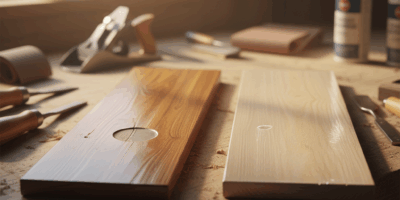
Shop layout has gotten complicated with all the conflicting advice and tool placement debates flying around. As a woodworker who has set up and reorganized more than one shop over the years, I’ve learned what actually matters and what’s overthought. Today, I’ll share everything I know about creating a woodshop layout that works.
Woodshop Layout: Creating a Space That Actually Works
Setting up a woodshop requires real planning. The layout directly affects your workflow, your safety, and how productive any given shop session is. Whether you’re working in a one-car garage or a dedicated building, the same principles apply — and getting them right from the start saves you from reorganizing around problems later.

Start By Measuring
Before you move a single tool, measure the space. Know the dimensions, the ceiling height, the entry points, and the location of any fixed features — electrical panels, doors, windows. These factors constrain what’s possible and determine what you can handle inside. A layout that looks fine on paper can fail completely if it ignores a door that swings inward or a ceiling that’s too low for sheet goods to stand on edge.
Work Zones
A functional woodshop organizes itself around work zones. Establishing these zones — and keeping them separate — is the single biggest contributor to an efficient shop layout.
Machining Zone
This is where your major power tools live: table saw, miter saw, jointer, planer, band saw. The critical requirement for each machine is clear infeed and outfeed space. A table saw can handle a 4×8 sheet, which means you need roughly 8 feet of clear space on each side of the blade at table height. Plan this first — it constrains everything else. I’m apparently a “infeed and outfeed first” person and planning for material movement always works better for me while squeezing tools into tight positions never does.
Assembly Zone
Assembly needs a large, flat, solid workbench — larger than you think you’ll need. Keep clamps, glue, screws, and assembly tools close at hand. Position this zone away from sawdust-producing machines: sawdust on glue surfaces before assembly is a problem, and sawdust on a fresh finish is worse. That separation is worth the extra steps between zones.
Sanding and Finishing Zone
Dedicate a space for sanding and finishing that’s as isolated from the rest of the shop as practical. Dust from sanding contaminates fresh finishes. Solvent fumes from finishing need adequate ventilation separate from where you’re running machines. A dust collection connection and good ventilation are both non-negotiable here.
Storage Zone
Efficient storage is often what separates a functional shop from a frustrating one. Lumber racks, tool cabinets, and small-item storage all need a place, and that place should be as close as possible to where the items are used. Lumber near the machining zone. Finishing supplies near the finishing zone. Assembly hardware near the assembly bench.
Safety in the Layout
Dust Collection
Sawdust is a health hazard, not just a nuisance. An effective dust collection system — with runs to the tools that generate the most dust — is part of the layout, not an afterthought. Plan the main duct routing when you’re placing tools, not after they’re bolted down.
Electrical
Most woodshop tools draw significant amperage. Multiple dedicated circuits are usually required — not just recommended. A table saw, jointer, and dust collector running simultaneously can exceed what a single circuit handles. Surge protectors on electronic tools are worth the money.
Ventilation
Finishes, solvents, and adhesives release fumes that accumulate fast in a closed space. Plan windows and exhaust fans to promote real airflow — not just a crack in the door. The finishing area especially needs mechanical ventilation rather than relying on ambient air movement.
Lighting
Overhead fluorescent or LED shop lighting for general illumination, plus task lights at specific stations. Good lighting reduces eye strain and improves accuracy on layout work and fine details. Natural light is great, but angle it so it doesn’t create glare on machine surfaces at specific times of day.
Ergonomics
Work Surface Height
Work surfaces at waist height — approximately 34-36 inches for most people — reduce back strain and improve accuracy on long sessions. Height-adjustable benches are ideal if you can swing the cost. At a fixed height, find what’s comfortable for your most common operations and build or set up to that.
Tool Placement
Frequently used hand tools should be within arm’s reach of where you use them — pegboards, wall-mounted holders, magnetic strips near specific machines. Time spent searching for a tool that should be right there is a small friction that adds up to real frustration over a year of shop sessions.
Movement Pathways
Keep pathways clear and wide enough to move material through them comfortably. A path that requires turning a board sideways to get past a machine is an accident waiting to happen. Clutter on the floor is always a safety issue in a shop.
Flexibility
Mobile Bases
Drill presses, planers, and other machines that you don’t use constantly benefit from locking mobile bases. They let you reconfigure the space for larger projects without relocating machines permanently. In smaller shops, this flexibility is essential.
Modular Storage
Modular workbenches and storage units that can be rearranged or expanded as your tools and projects change make the shop more useful over time. What works for your shop today may need to change in two years when you add a new machine or take on different work.
Material Handling
Lumber racks for easy access — wall-mounted racks save floor space. Store longer boards horizontally if possible; vertical storage works for shorter pieces and cut-offs. A rolling cart for moving heavy sheet goods or finished pieces prevents the back strain that accumulates from carrying awkward loads across the shop repeatedly.
Maintenance Area
A dedicated bench with grinders, vises, and sharpening tools keeps maintenance tasks organized and prevents them from happening at the assembly bench where metal filings and oil contaminate the work surface. Oil and cleaning supplies nearby. Regular maintenance extends tool life and keeps cutting edges sharp enough to produce the quality of work you’re after.
One Final Thought
Every shop is different because every woodworker’s work is different. But the principles are consistent: plan zones before placing tools, account for material movement paths, address dust collection and ventilation before they become problems, and build in flexibility wherever you can. A shop that works with you instead of against you is one you’ll actually use — and that’s the whole point.