Choosing between wood species has gotten complicated with all the opinions and conflicting advice flying around. As someone who has worked with both walnut and cherry extensively over the years, I’ve learned how differently these two woods behave over time — and why it matters for every project decision you make. Today, I’ll share everything I know.
Walnut and cherry rank among the most popular hardwoods for fine furniture, but they age in completely opposite directions. Understanding how each wood changes over time helps you choose the right species for what you’re actually trying to build.

Initial Appearance
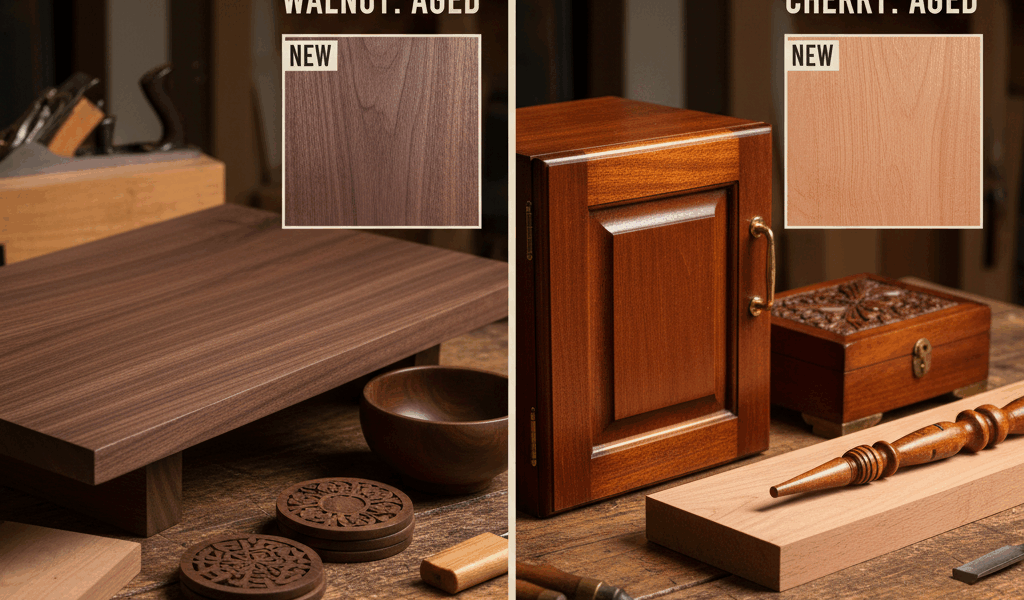
Walnut: Fresh-cut black walnut shows rich chocolate brown heartwood with purple undertones. The sapwood appears cream to pale yellow, creating a dramatic contrast that looks best immediately after surfacing.
Cherry: Newly milled cherry comes out pale salmon-pink to light reddish-brown. The subtle color consistently surprises woodworkers who were expecting the deep red of aged cherry. Sapwood ranges from white to pale pink.
I’m apparently a “patience pays off” person with cherry, and it always ends up being worth the wait — while walnut delivers instant gratification that eventually mellows out. Many beginners choose walnut for that immediate visual impact, which is a completely legitimate reason.
Color Changes from Light Exposure
Both species change dramatically with UV light exposure, but in opposite directions — which is the part most people don’t know when they’re choosing between them.
Cherry darkens significantly. Within weeks of finishing, cherry develops richer reddish-brown tones. After 6-12 months, the pale salmon transforms into the classic deep red-brown you see on antique cherry furniture. That darkening continues for years, eventually reaching a deep burgundy.
Walnut lightens gradually. The dark chocolate brown fades toward medium brown with golden highlights. Purple tones disappear first. The dramatic darkness of fresh walnut mellows into a warmer, lighter tone over 1-2 years. Extended sun exposure can push walnut all the way to tan.
Darkening vs. Lightening Timelines
Cherry shows visible darkening within the first month. Place a piece of hardware on fresh cherry, remove it after 30 days, and the covered area looks distinctly lighter than the exposed wood around it. It’s a striking demonstration of how fast this species moves.
That rapid change slows after the first year but never fully stops. Five-year-old cherry looks noticeably darker than one-year-old pieces — the progression is real and ongoing.
Walnut’s lightening is more gradual. Noticeable changes take 6-12 months. The process continues slowly for several years before stabilizing at a medium brown tone. Less dramatic than cherry’s shift, but still meaningful for long-term planning.
Effect on Design Choices
Cherry’s dramatic darkening means you build with pale wood knowing it becomes rich and dark. If the look of aged cherry is what you want, accept upfront that your new piece won’t match that appearance for months. That’s what makes cherry endearing to us woodworkers — you’re building something that keeps getting better.
Some woodworkers accelerate cherry’s darkening by leaving unfinished pieces in direct sunlight for days or weeks before finishing. This “sunning” technique previews the eventual color and lets you make finishing decisions based on where the wood is headed rather than where it starts.
Walnut projects start with maximum visual impact and mellow over time. If you prefer consistently dark furniture, walnut’s gradual lightening is worth factoring in early.
Sapwood Considerations
Both species show strong color contrast between heartwood and sapwood. Cherry’s pale sapwood becomes light brown with age but never matches the dark heartwood tones. Walnut sapwood stays lighter than the heartwood even after years of exposure.
Some woodworkers cut away all sapwood during milling. Others leave it for visual contrast. The difference does become less dramatic as both woods age, but it never completely disappears — factor that into your design decisions from the start.
Finishing Impact on Color Changes
Oil finishes accelerate initial darkening in both species. Boiled linseed oil or Danish oil adds amber tones right away, giving cherry a head start on its natural progression and temporarily enriching walnut’s color before it begins fading.
Water-based finishes preserve initial color better. Cherry stays lighter longer with water-based poly; walnut maintains its dark appearance further into its life. All clear finishes amber over time, adding yellow tones to both woods — this yellowing partially offsets walnut’s natural lightening, which can be a useful effect.
Consistency in Matched Projects
Building matched furniture pieces from either species requires planning. Cherry pieces built months apart will show different colors when finished — the older piece appears darker than the newer one. For matched sets, mill and finish all pieces at the same time. Wood that ages together stays consistent as it changes.
Walnut presents fewer matching challenges since its lightening happens slowly. But pieces built years apart can still show noticeable color differences, so the same principle applies: mill and finish together when consistency matters.
Choosing Based on Color Goals
Choose cherry when you want wood that keeps improving with age. The transformation from pale pink to deep red-brown adds character over time. Patience rewards you with furniture that looks better at ten years than it did at one.
Choose walnut when you want immediate visual impact and a stable medium-brown result over the long term. The initial darkness is impressive, and where the wood ends up is still attractive. Walnut suits projects where impact from day one matters more than watching the wood evolve.
Both woods develop beautiful patinas. Understanding their different aging patterns lets you choose the species that actually matches your goals — not just the one that looks better in the store.
Recommended Woodworking Tools
HURRICANE 4-Piece Wood Chisel Set – $13.99
CR-V steel beveled edge blades for precision carving.
GREBSTK 4-Piece Wood Chisel Set – $13.98
Sharp bevel edge bench chisels for woodworking.
As an Amazon Associate, we earn from qualifying purchases.