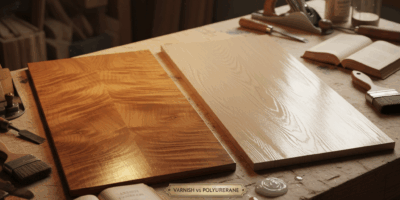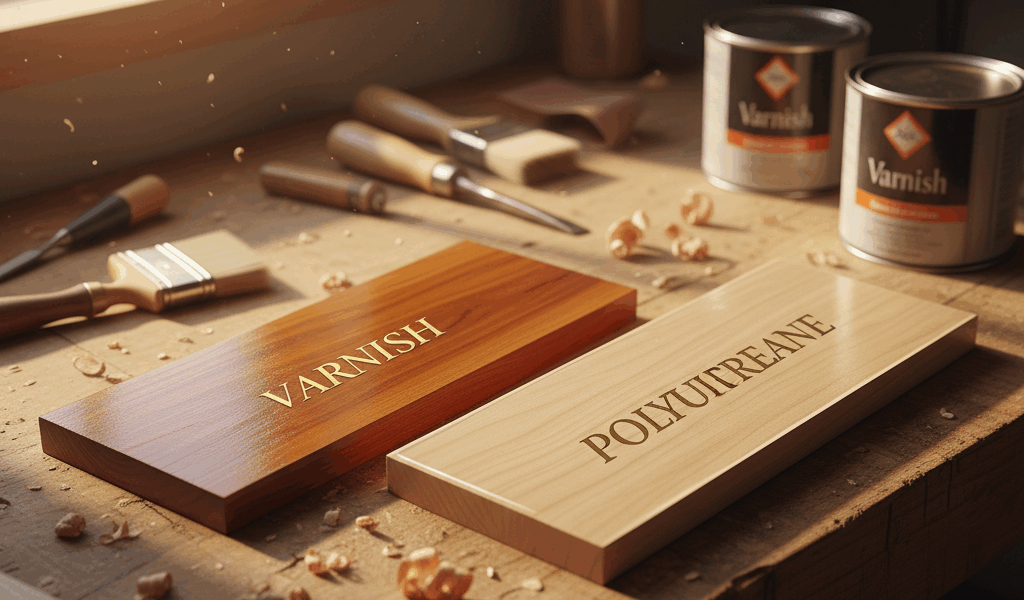
Varnish vs. Polyurethane
Choosing between varnish and polyurethane has gotten complicated with all the conflicting opinions flying around. As someone who has used both extensively — on outdoor furniture, indoor floors, and everything between — I’ve learned what actually matters when you’re standing in front of a wood project trying to decide. Today, I’ll share what I know.

What is Varnish?
Varnish is a transparent, hard, protective finish made from oils, resins, and solvents. It creates a sturdy coating that can range from glossy to matte. Varnish tends to penetrate the wood rather than just sit on top, which enhances the natural grain while providing durability. Varieties include spar, marine, and alkyd varnish — each designed for specific applications.
Characteristics of Varnish
Varnish provides excellent UV protection, making it the right choice for outdoor work. It also forms a flexible film, allowing the wood to expand and contract with weather changes without the finish cracking. The tradeoffs: varnish takes longer to dry and cure, requires multiple coats with sanding between them, and when it eventually needs refreshing, often requires complete stripping and reapplication.
What is Polyurethane?
Polyurethane is a synthetic resin-based finish that creates a hard, durable coating. It comes in water-based and oil-based versions. Water-based polyurethane dries quickly and has low odor — the practical choice for most indoor work. Oil-based polyurethane provides a rich, amber tone and a thicker, more resilient final surface.
Characteristics of Polyurethane
Polyurethane delivers a tough, abrasion-resistant surface that holds up well to daily use. It resists chemicals and moisture better than varnish. Quick drying time speeds up project completion. Water-based versions typically need fewer coats; oil-based versions build a thicker film per coat. The challenge with both is application — bubbles and brush marks are the common failure mode without proper technique.
Application Methods
Varnish requires careful brushwork and maintaining a wet edge to prevent lap marks — it punishes rushing. Polyurethane gives you more flexibility: brush, roller, or spray application all work. Both require proper sanding between coats and good ventilation during application and curing. Temperature matters too; applying either finish in extreme heat or cold affects how it cures.
Usage Scenarios
Varnish is the right choice for outdoor furniture, boats, and exterior woodwork — the UV resistance and flexibility make it purpose-built for those applications. Polyurethane dominates for interior projects: flooring, furniture, cabinetry. Its ability to take heavy traffic and daily wear makes it practical for surfaces that see real use.
Maintenance and Durability
Varnish-coated surfaces need periodic inspection, especially outdoors. Spot repairs are possible for minor damage, but significant deterioration often means stripping and starting over. Polyurethane finishes are generally lower maintenance — damaged areas can often be spot-repaired with minimal fuss. Regular cleaning with a damp cloth keeps most polyurethane surfaces looking good for years.
Environmental and Health Considerations
Both release volatile organic compounds during application and curing. Water-based polyurethane has significantly lower VOC content than oil-based versions, making it safer for indoor use and better for air quality. Proper ventilation and PPE are important regardless of which you choose. Eco-friendly options exist for both product categories if that matters for your project.
Cost and Availability
Polyurethane generally costs more but applies faster and easier, which can offset the price difference in labor time. Both products are widely available at hardware stores and online. Figure out your project scope and budget before buying — quality matters, but the most expensive option isn’t always the right one for a given job.
One Final Thought
The choice between varnish and polyurethane comes down to where the project lives and what it needs to withstand. Outdoors, in weather, with UV exposure: varnish. Inside, with daily use and abrasion: polyurethane. Knowing that, the decision usually makes itself.