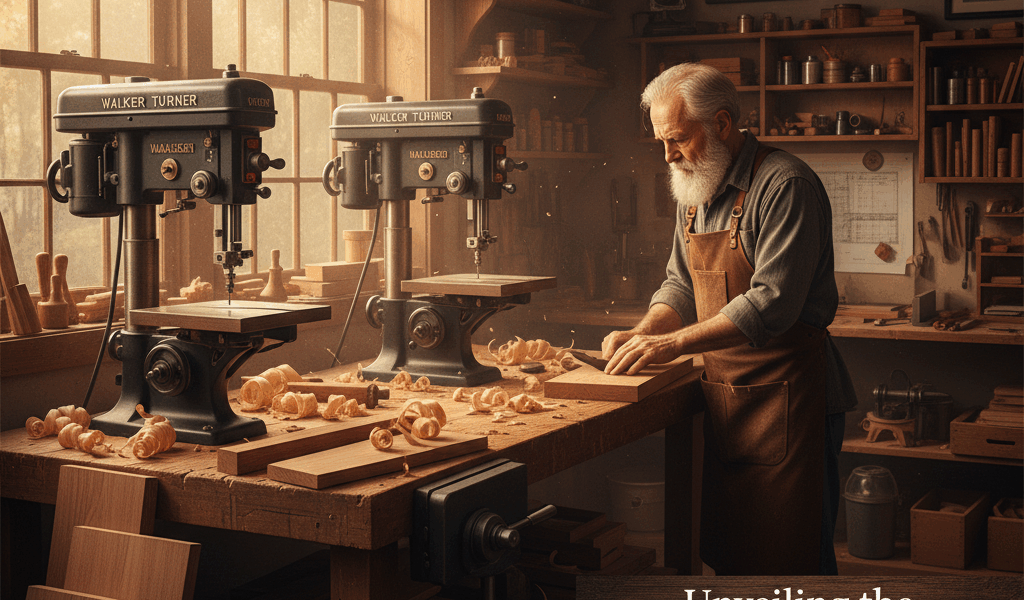
Vintage tool brands have gotten their own passionate followings, and Walker Turner is one that woodworkers and collectors talk about with real respect. As someone who has bought, used, and restored vintage machinery, I find the Walker Turner story genuinely interesting — a company that built tools so well that they’re still running in shops nearly a century later. Today, I’ll share everything I know about Walker Turner and why their machines still matter.
The Formative Years
Walker Turner Co. started around 1929 in New Jersey, initially focused on electric bench grinders. Their insistence on performance over flash quickly built a reputation — not through marketing, but through tools that outlasted everything around them. Businesses noticed, and the growth followed.
Expansion and Acquisition
Kearney and Trecker Corp acquired Walker Turner in the mid-1940s and brought significant investment with the transition. The product line expanded to include bandsaws, drill presses, and other stationary shop tools. By this period Walker Turner had become synonymous with American shop quality — the kind of machinery that working tradespeople and serious hobbyists both sought out.
Landmarks and Milestones
- “The Driver Line” launched in the 1930s as a line of light-duty machines that became household names for their performance and dependability.
- During World War II, Walker Turner shifted capacity toward defense machinery and tooling equipment, becoming part of the American manufacturing war effort.
- From 1929 to 1941, Walker Turner’s production plant expanded more than tenfold — a reflection of genuine demand rather than financial engineering.
What Made Them Special
Walker Turner wasn’t about impressive catalogs or extraneous features. They built tools that were reliable, durable, and hard-working. I’m apparently a “buy the old iron, restore it right” person and that approach always works better for me while buying a cheap modern equivalent and replacing it in five years never does. Walker Turner’s machines represent exactly why that philosophy holds up — their drill presses and bandsaws from the 1940s and 50s are still running in shops today.
The Decline
Despite their reputation, Walker Turner discontinued production in the late 1980s under pressure from competition and market changes. It marked the end of an era for American-made stationary shop tools at that quality level. The brand ceased, but the machines didn’t.
Walker Turner Today
Vintage Walker Turner tools are a serious commodity among collectors and working woodworkers. Their durability means that a well-maintained machine from seventy years ago still performs as intended. Restoration communities keep parts and knowledge circulating, and the value of quality vintage examples has steadily increased over time.
One Final Thought
Walker Turner’s legacy is the legacy of American tool manufacturing at its best — honest machines built to outlast the people who bought them. That’s what makes discovering a Walker Turner drill press or bandsaw endearing to woodworkers who appreciate quality: it represents a standard of manufacturing that’s genuinely worth understanding and preserving.