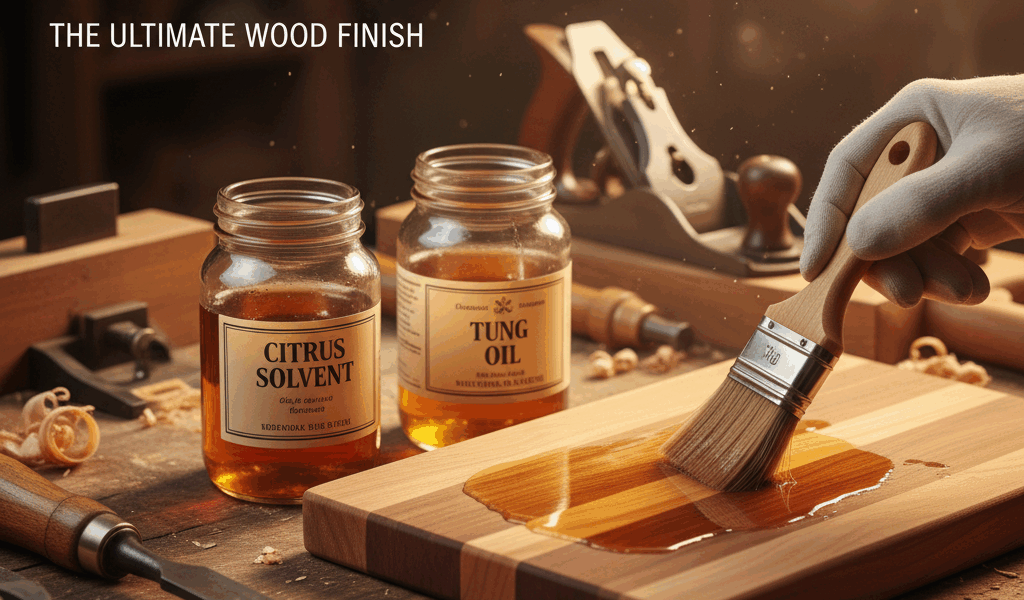
Natural wood finishes have gotten interesting with all the penetrating oil options and eco-friendly solvent choices flying around. As a woodworker who has moved steadily away from petroleum-based products in my shop over the years, I’ve found the tung oil and citrus solvent combination to be one of the most satisfying finishes to work with. Today, I’ll share everything I know about why this pairing works so well.

The Basics of Tung Oil
Tung oil comes from the nuts of the tung tree, native to Eastern Asia, and has been used as a wood finish for centuries. It works by infiltrating wood fibers and curing within them, creating a water-resistant barrier and a rich, matte appearance that shows off grain beautifully. Unlike film-building finishes, it becomes part of the wood rather than sitting on top of it.
The Challenge: Viscosity
Pure tung oil’s thickness is both its advantage and its limitation. The viscosity that makes it durable also makes it difficult to spread evenly, especially on close-grained hardwoods. It takes longer to dry than thinner finishes, and applying it too thick leads to a sticky, gummy surface that never quite cures properly. The solution is thinning — and the best thinner for it is citrus solvent.
Why Citrus Solvent?
Citrus solvent is produced through distillation of citrus fruit peels. It’s a natural substance without the harmful chemicals in most commercial petroleum thinners. It thins tung oil effectively and adds a pleasant citrus scent that makes shop time noticeably more enjoyable than working with mineral spirits or naphtha. The environmental footprint is smaller too — citrus solvent is biodegradable.
The Right Mix
A 50/50 mix of tung oil to citrus solvent is the standard starting point. That ratio thins the oil enough for good penetration without sacrificing the protective qualities. I’m apparently a “heavier solvent for the first coat, richer oil for later coats” person and that progression always works better for me while using the same ratio throughout never does — pulling oil deep on the first application sets up everything that follows.
Application Steps
Stir the mixture before applying — shaking introduces bubbles. Apply with a clean, lint-free cloth in the direction of the grain. Let the first coat sit for about 15 minutes, then wipe off any excess that hasn’t soaked in. Allow 24 to 48 hours of drying time between coats. Rushing tung oil is the most common way to end up with a gummy finish that never fully cures.
Fire Safety
This is not optional information: tung oil-soaked application cloths can spontaneously ignite as the oil cures and generates heat. Lay used cloths flat outside to fully cure before disposal, or submerge them in water in a metal container. Every year woodworkers have shop fires from improperly disposed oily rags. Don’t be one of them.
Outdoor Use
The tung oil and citrus solvent combination works well for outdoor furniture. The penetrating oil protects without trapping moisture, and maintenance reapplication is simple — a light sand and a fresh coat as needed, typically every year or two depending on exposure. That’s what makes penetrating oil finishes endearing to woodworkers who build outdoor pieces — the maintenance is genuinely manageable.
The Environmental Case
Using citrus solvent instead of a petroleum-based thinner reduces the environmental impact of your finishing process without any compromise in finish quality. For woodworkers who care about what goes into and out of their shop, that’s a meaningful consideration worth acting on.