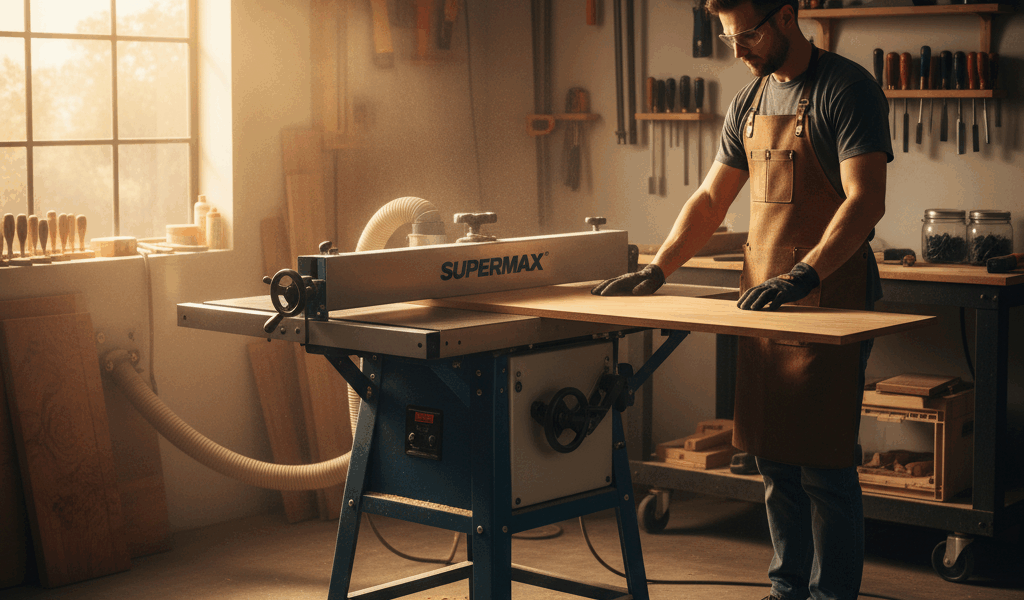
Drum sanders have gotten complicated with all the brands and specs flying around. As someone who has sanded more board feet of wood than I care to count, I’ve learned which machines actually deliver and which ones just sound good on paper. Today, I’ll share everything I know about the Supermax 16-32.
Supermax 16-32 Drum Sander: What You Actually Need to Know
Efficiency and consistency are the whole game in a production woodworking workflow. The Supermax 16-32 is one of the few drum sanders in its price range that earns a permanent spot in the shop rather than becoming the machine you work around.
The 16-32 Configuration and Why It Matters
The name tells you the capacity. It handles pieces up to 16 inches wide in a single pass and up to 32 inches wide in two passes by flipping the workpiece. That second-pass capability is what separates this from smaller drum sanders that cap out at 12 or 16 inches total. Glued-up tabletops, wide panels, cabinet doors — two passes handles the vast majority of what I run through mine.
The drum is 5 inches in diameter, extruded aluminum. That aluminum construction is meaningful, not marketing. Aluminum dissipates heat rather than absorbing it, which means the drum runs cooler over a long session. I ran an old steel-drum sander years ago that scorched pine on anything longer than a few minutes of continuous use. The Supermax doesn’t do that. Long sessions, warm room, fast feed — it stays consistent.
Controls That Don’t Slow You Down
I’m apparently a “controls matter” person and straightforward interfaces always work better for me while complicated control panels slow me down. The Supermax has a simple panel: power, drum height, feed speed. The depth gauge is accurate enough that I trust it rather than running test pieces constantly to verify where I am. Sanding belt changes are tool-free and take about two minutes once you’ve done it a few times. The first time takes five minutes. Both are acceptable.
The self-cooling drum extends belt life meaningfully. I replaced belts on my old machine every few hours of use. On the Supermax I run significantly more footage on the same belt before it starts showing wear in the finish quality.
Build Quality in Practice
The steel frame is heavy enough to stay put during operation. That matters because vibration in a drum sander shows up directly in the surface finish — a machine that walks around on the floor or vibrates excessively produces chatter marks. The Supermax runs smooth. All the major fasteners are accessible for maintenance without disassembly.
The footprint is reasonable for what the machine does. I had a larger drum sander before this that dominated the shop in a way that was genuinely inconvenient for other operations. The 16-32 fits in a corner without blocking access to anything.
Performance on Actual Wood
The 1.5 HP motor runs the drum at consistent speed without bogging on hardwoods. I’ve run hard maple, white oak, walnut, and figured cherry through mine without issues. The motor doesn’t labor on dense species the way underpowered alternatives do. Feed rate adjustment lets you dial in material removal for the species and grit you’re running — slower feed for aggressive material removal, faster for final passes.
The dust collection port works as designed, which sounds like a low bar but is genuinely not standard across drum sanders in this price category. A working dust collector keeps the abrasive paper from loading up with dust and extends belt life further.
Maintenance Without Drama
Lubricate the feed rollers and height adjustment mechanism periodically — the manual is specific about intervals and I follow it. Check the drum for wear annually. The bigger maintenance task is keeping the dust collection clear. A clogged collector is the most common way to turn a good sanding session into a poor one. Clean it out before and after any major session.
Check paper wear frequently while running. A belt that’s done shows up in the finish quality before it stops cutting entirely. Swap it out when the finish starts showing swirl marks rather than waiting for it to fail — the cleanup sanding from a worn belt is more work than the belt costs.
Accessories That Earn Their Place
Infeed and outfeed tables are the first thing to add. Longer pieces without support snipe on the entry and exit — the board dips slightly and the drum takes a deeper bite at the leading and trailing edges. Support tables eliminate that. The digital readout for thickness measurement replaces estimation with an actual number, which matters when you’re thicknessing multiple pieces to match. Expandable roller tables for large glue-ups are optional but useful if you’re regularly running wide panels.
Cost and Long-Term Value
The Supermax 16-32 is a real investment. I was skeptical of the price point until I actually used one. The time saved versus belt-sanding and re-sanding large panels is substantial. The consistency means less material wasted from uneven thickness. A machine that runs reliably for many years without needing significant repair is worth more over time than a cheaper one that needs attention constantly — and the Supermax has a track record of long service life from owners who run it hard.
Before You Go
If your shop involves regular panel work and you’ve been hand-sanding or running panels through a belt sander to get to consistent thickness, a drum sander changes that workflow completely. The Supermax 16-32 is a solid choice in the price range — practical features, good build quality, and a design that doesn’t fight you. Dial it in once and it just works.