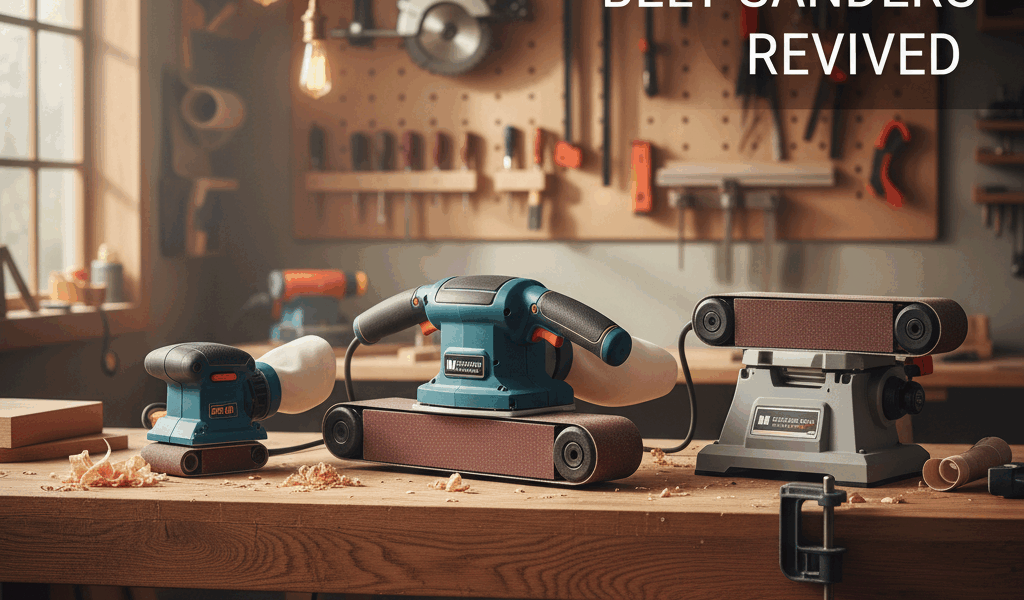
Belt sanders have gotten complicated with all the amp ratings and brand comparisons flying around. As someone who has used belt sanders across a wide range of projects — from floor leveling to furniture refinishing — I’ve learned what actually separates a useful machine from one that fights you. Today, I’ll share everything I know.
Best Belt Sander
Power and Motor
Amps tell you how much work the motor can sustain before it starts to bog down. For furniture and general woodworking, 8 amps is the practical floor for serious use — models under that start to struggle when you push them. Heavy stock removal or large surface work benefits from 9-11 amps. I’ve run a lower-amperage sander into thermal cutoff on a long session and had to wait it out — that’s the kind of thing that teaches you to buy more motor than you think you need.
Belt Size
The 3×21-inch belt is the most common size for handheld work — maneuverable and good for most furniture and detail applications. The 4×24 moves more material faster but is harder to control in tight spaces. That’s what makes the 3×21 endearing to us woodworkers who do a mix of work — it handles most situations without forcing compromises. Go 4×24 if you’re primarily doing large flat surfaces or floor work.
Speed Settings
Variable speed isn’t optional for versatile work. Slower settings let you work delicate species or near edges without burning through material. Higher settings handle stock removal efficiently. Look for controls you can reach without repositioning your grip — mid-operation speed adjustments happen more often than you’d expect.
Dust Collection
Built-in dust bags fill up fast and block airflow when full, which hurts motor performance. A direct port connection to a shop vacuum is meaningfully better. If you’re doing any significant indoor sanding, good dust collection isn’t a convenience feature — it’s an air quality requirement. Fine hardwood dust is not something you want to breathe repeatedly.
Additional Features
- Automatic Tracking: Keeps the belt centered without manual adjustments. Worth having — a wandering belt derails quickly and can damage work.
- Lock-on Button: Lets the sander run continuously without holding the trigger. Useful for long sessions.
- Adjustable Handles: Reduces fatigue on extended use. Underrated feature.
- Quick Belt Change: Simplifies switching grits mid-project. More useful than it sounds when you’re moving through grits on a large surface.
Top Belt Sander Models
Makita 9403
11-amp motor, 4×24-inch belt, variable speed. This is the workhorse option — genuinely heavy-duty, quiet for its class, and with good dust collection. If you need a belt sander that won’t slow down under sustained load, this is the machine. It’s priced accordingly.
WEN 6502T
4.3-amp motor, 4×36-inch belt plus an integrated disc sander. The lower amperage is a real limitation for demanding work, but the combination format is useful if you want both functions in a single benchtop unit. Good for light to medium shop use where the disc sander adds value.
PORTER-CABLE 352VS
8-amp motor, 3×21-inch belt, variable speed, metal housing. Solid mid-range choice. The ergonomic design is genuinely comfortable and the belt tracking is reliable. Good balance of capability and control for furniture work.
Hitachi SB8V2
9-amp motor, 3×21-inch belt, variable speed, clear front cover for better sightlines. The soft grip handles are noticeably comfortable on longer sessions. Dust collection is efficient. A strong contender at its price point, especially if visibility matters in your work.
Consider Your Needs
Match the machine to the actual work. Heavy stock removal on large surfaces: go with higher amperage and a larger belt. Furniture refinishing and detail work: a quality 3×21 with variable speed will serve better. Don’t buy more sander than the work requires, but don’t buy less either — a machine that bogs down or overheats mid-project wastes time and adds frustration. The right tool for the actual job is always the best tool.