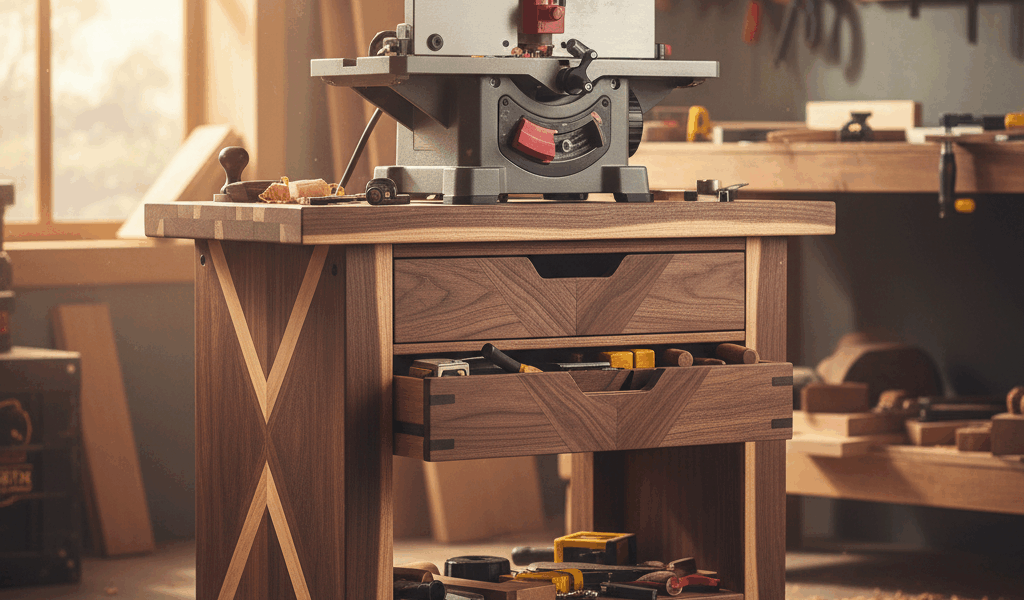
Shop machines have gotten complicated with all the options and spec debates flying around. As a woodworker who uses a jointer regularly, I know how much this machine changes what’s possible in the shop — and how much the stand matters to that experience. Today, I’ll share everything I know about benchtop jointer stands.
The Benchtop Jointer Stand: What You Need to Know
Precision in woodworking often starts at the jointer. Flat faces and straight edges are the foundation that every subsequent operation depends on — and a benchtop jointer stand is the right setup for woodworkers who need that precision without committing to a full-size floor machine. Let’s look at what makes these units work and what to consider when buying one.

Key Components
A benchtop jointer stand has five main components that all need to work together:
The infeed table and outfeed table are where the wood enters and exits the machine. Both are adjustable for depth control — the infeed sets how much material is removed per pass, and the outfeed level determines the final surface height after the cut.
The fence acts as both guide and support. It keeps the workpiece moving in a consistent direction and ensures edges exit perfectly straight and square to the face. Small errors in fence alignment translate directly into joints that won’t close cleanly.
The cutter head rotates at high speed and does the actual material removal — producing a smooth, flat surface when set up correctly. The cutter head design (straight knives vs. helical cutterhead with carbide inserts) significantly affects surface quality and noise level.
The dust collection port connects to your shop dust collection system. Jointers generate significant chip volume, and adequate collection keeps the machine running cleanly and the workspace clear.
Operating Sequence
- Adjust the infeed table to the desired depth of cut. For most operations, 1/32 to 1/16 inch per pass is appropriate. Taking too much in a single pass risks tear-out, especially on figured or reversing grain.
- Position the fence at 90 degrees to the table (or at your desired angle for chamfers). Verify squareness with a reliable reference square before running critical pieces.
- Place the lumber with one flat face against the fence. Feed it across the infeed table and over the cutter head in a smooth, continuous motion. Use push blocks or push sticks — not bare hands — to control the workpiece near the cutter head.
I’m apparently a “push blocks always, no exceptions” person and that habit always protects me at the jointer while reaching past the cutter head never does. Safety at this machine is non-negotiable.
Buying Considerations
Match the jointer’s capacity to the lumber you most commonly work with. A 6-inch jointer handles typical furniture lumber; an 8-inch machine handles wider stock. Cutter head speed matters: faster rotation produces smoother surfaces but increases the risk of tear-out on difficult grain. That’s what makes benchtop jointer specifications endearing and also tricky — the right numbers depend on your specific material and project types.
Power and performance should match your actual workload. A 1 HP motor is adequate for light to moderate hobby use. Heavier production work or consistently thick hardwoods benefit from more motor capacity.
Maintenance
- Clear chips and dust from the machine after every session. Accumulated debris affects how the tables move and can cause rust on unprotected cast iron surfaces. Wax the table surfaces periodically to reduce friction and protect against moisture.
- Check knife sharpness regularly. Dull knives require more passes to achieve the same result, increase tear-out risk, and put more load on the motor. Sharpen or replace at the first signs of reduced performance.
- Inspect the fence for squareness and the tables for coplanarity before any critical session. A machine that’s slightly out of adjustment produces parts that are slightly wrong — and those errors compound through subsequent operations.
One Final Thought
The benchtop jointer stand earns its place in the shop by enabling the flat faces and straight edges that everything else depends on. Understanding the components, following a consistent operating sequence, and maintaining the machine properly makes the difference between a tool that elevates your woodworking and one that introduces subtle errors you spend the rest of the project chasing down.