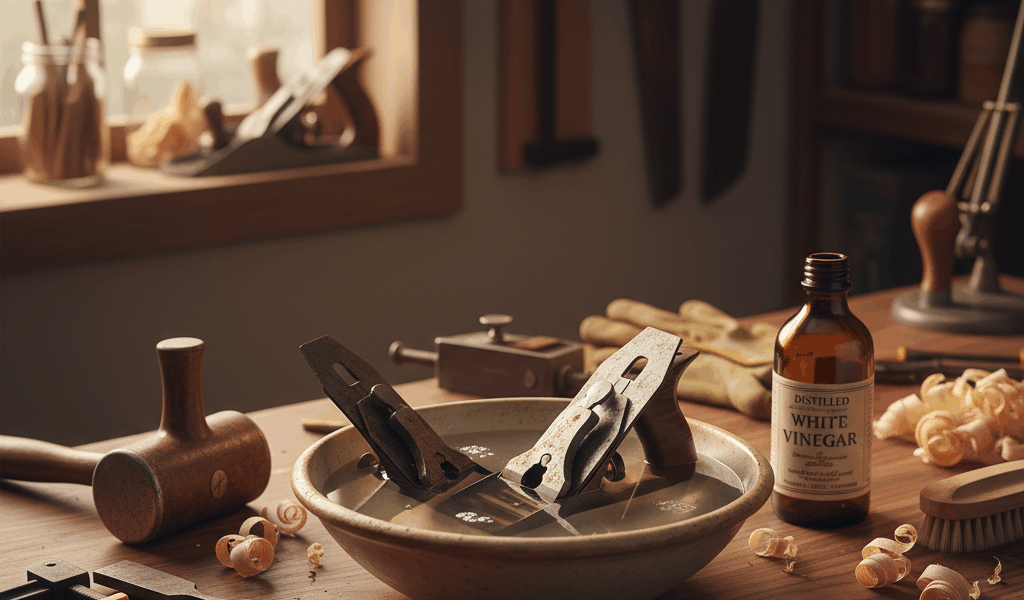
Vinegar Rust Removal
Rusting is a common problem that most metal objects eventually face. Over time, beloved tools, fixtures, and decorations could fall victim to this unforgiving process. The good news? There’s an easily accessible and affordable solution sitting in most kitchen pantries: vinegar.
I’ve rescued quite a few old hand tools this way — chisels, hand planes, antique saws — things that looked too far gone until a vinegar soak brought them back. It’s become one of my favorite shop tricks.

The Science Behind Vinegar Rust Removal
Vinegar, or acetic acid, is a powerful and affordable substance that can do wonders in battles against rust. The acid in vinegar reacts with rust, or iron oxide, breaking it down on the molecular level. Instead of traditional, potentially harmful chemicals, vinegar provides a safe, non-toxic, and effective alternative.
The Process
The great thing about vinegar is that it’s a common household item. You likely have a bottle tucked away in your pantry right now. That makes it an easy go-to choice for rust removal.
- Prepare the item
Before immersing your rusty object in vinegar, give it a good clean. You want to remove dirt, debris, or loose rust to help the vinegar do its job as effectively as possible. - Submerge in vinegar
Place the cleaned item into a container large enough to hold it. Fill the container with enough vinegar to cover the object entirely. This ensures no spot is left unchecked. - Let it sit
Allow the item to sit for 12-48 hours, depending on the severity of rust. Resist the urge to interfere — the acid needs time to work into the rust. Heavily rusted tools may need the full 48 hours. Check periodically and pull the item when the rust starts to look dark and loosened. - Scrub off the rust
After the vinegar has had sufficient time, remove your item from the solution. Use a brush — an old toothbrush or a steel wool pad — to scrub away the loosened rust. It’ll come off much easier than you’d expect. - Rinse and dry
Rinse the item thoroughly with water to remove any remaining vinegar or rust particles. Dry it immediately and thoroughly to prevent future rust. A quick wipe-down with a light oil after drying will keep the metal protected.
That’s what makes vinegar rust removal endearing to us woodworkers — it’s the kind of solution that makes you feel like you’re working with chemistry instead of against it. Old tools that would have cost a fortune restored professionally come back to life for the price of a bottle of white vinegar.
Choosing the Right Vinegar
There are many varieties of vinegar available, but not all are created equal when it comes to rust removal. White vinegar, with its higher level of acidity, proves more efficient. However, apple cider vinegar and other types can still do the job, albeit at a slower pace.
An Eco-Friendly Solution
Using vinegar for rust removal aligns with a broader movement towards eco-friendly solutions. It’s non-toxic, biodegradable, and generally safe around children and pets. Incorporating it into your rust-battling routine is a win for your shop and your environment.