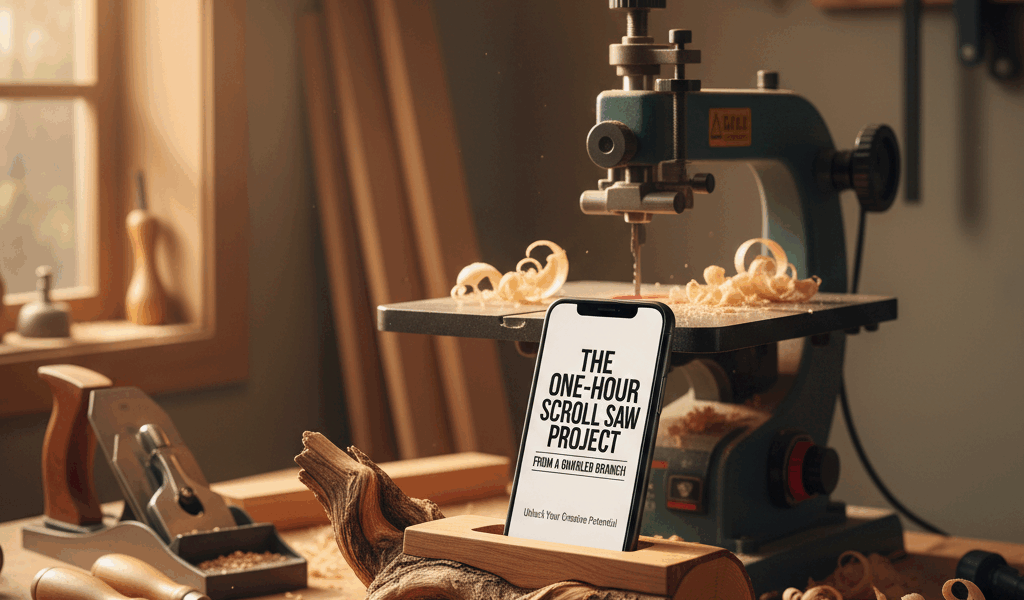
Small shop projects have gotten complicated with all the fancy designs and multi-piece constructions flying around. As a woodworker who uses a scroll saw regularly, I can tell you that the scroll saw is one of the most underused tools in most shops — and this one-piece phone dock project is the kind of thing that reminds you why you bought it. Today, I’ll share everything I know about building it.
While everyone obsesses over table saws and routers, the scroll saw sits quietly waiting for someone to remember that intricate curves don’t have to be difficult. This phone dock project takes a single piece of wood and about an hour of shop time, and proves that the simplest designs are often the most useful ones.
The One-Piece Concept
Traditional phone docks involve multiple components — a base, an upright, some kind of slot or channel. More pieces mean more joinery, more alignment issues, and more chances for something to go wrong. This design cuts everything from a single block, eliminating all of that.
Start with a piece of hardwood about 6″ long, 4″ wide, and 1-1/2″ thick. Walnut, cherry, and maple all work beautifully — I’m apparently a “walnut for small projects” person and it always photographs better than any other species while maple can look a bit plain until the finish goes on. The thick stock is important: the phone nestles into a slot cut into the block itself rather than leaning against a separate upright.
The Template
The design is straightforward. Looking at the block from the side, picture a slot angled at about 75 to 80 degrees from horizontal — steep enough that your phone leans back slightly, but not so vertical it feels precarious. The slot should be about 3/8″ wide to accommodate phones in cases, and about 1-1/2″ deep to hold the phone securely.
Draw this profile on the end of your blank. The slot starts about 1″ from the back edge and angles forward. Below the slot, extend the kerf down to within 3/8″ of the bottom — that’s your cable channel if you want to charge while docked. Simple, functional, and invisible from the front.
Cutting with the Scroll Saw
This is where the scroll saw earns its place. Drill a 3/8″ starter hole at the top of where the slot will be. Thread the scroll saw blade through the hole, reattach it, and start cutting.
Follow the angled line down to where the cable channel ends. Back the blade out and repeat for the other side of the slot. The waste piece pops out cleanly. With a quality blade and steady hands, the cut surfaces need minimal sanding.
For the cable channel, use the same technique: two parallel cuts about 1/2″ apart down to your stopping point, then remove the waste.
Shaping the Exterior
A rectangular block works fine, but the scroll saw is right there — so why not add some detail? A gentle radius on the front corners, a slight taper from bottom to top, or a decorative notch at the top of the slot all take minutes to cut. Draw the shape, follow the line, and you’re done. No template, no complex setup.
Finishing the Slot Interior
The slot interior needs careful attention. Your phone contacts this surface constantly, and any rough spots will scratch the case. Wrap sandpaper around a thin piece of scrap — a paint stir stick works perfectly — and sand the slot walls smooth, working up through grits to 220 or finer.
Add a thin strip of peel-and-stick felt to the bottom of the slot if you want extra protection. Cut it to width, press it in, and your phone rests on soft material instead of bare wood. A small detail that makes the finished piece feel considered rather than just functional.
The Weight Question
A 6″ x 4″ x 1-1/2″ block of walnut weighs about 12-14 ounces — enough to keep the phone stable. Lighter species like poplar might need ballast. Mortising steel bar stock into the bottom of the block works well, or drill a few large holes in the bottom and fill with lead shot and epoxy. Either way, the weight should be invisible from any viewing angle.
Finishing
Oil finishes look beautiful on walnut and cherry — they penetrate the grain and enhance the color without building up a film that obscures the wood figure. For harder species like maple, a thin coat of lacquer brings out the figure without the thick build. Pay extra attention to the slot interior: two coats minimum with light sanding between coats. Let everything cure fully before using the dock, especially with oil finishes that can transfer to surfaces for several days after application.
Variations Worth Trying
Once you’ve made the basic version, the upgrades are easy. A second smaller slot behind the main one holds a tablet. A series of small holes drilled in the back creates a pen holder. Mortising a wireless charging coil into the base eliminates visible cables entirely — search for “Qi charging module” and you’ll find options that fit without much modification to the basic design.
One Final Thought
The one-hour timeline assumes your wood is already milled. Add time for rough lumber prep, and budget extra if you’re adding features. But the core project — single piece of hardwood, scroll saw, functional phone dock — really is a 60-minute build. For something that sits on your desk and you use every day, that’s an excellent return on your time and material.




Stay in the loop
Get the latest crafted wood creations updates delivered to your inbox.