Wood desk tops have gotten a wide range of options with all the species choices and construction debates flying around. As a woodworker who has built several solid wood desks over the years, I’ve developed strong opinions about what works for a daily-use writing surface. Today, I’ll share everything I know about choosing and caring for a wood desk top.

Species and What They Actually Mean for Daily Use
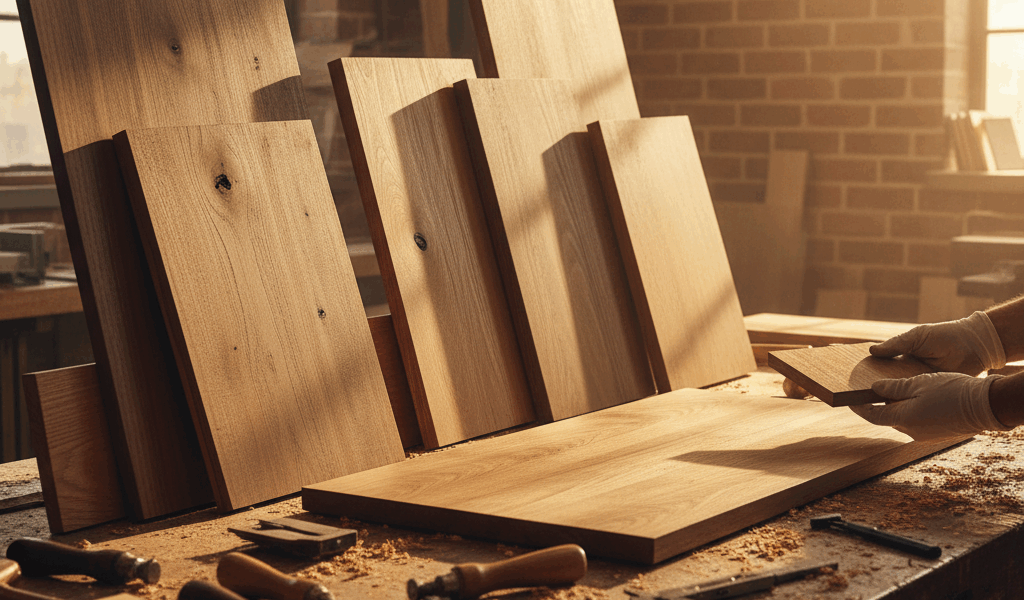
Hard maple is the most durable common choice for a desk surface. Dense, fine-grained, and resistant to denting from everyday use — keyboard edges, stapler corners, coffee mugs that miss the coaster. If your desk is a work surface that gets worked, maple holds up without showing the wear the way softer species do. The light color and subtle grain produce a clean, contemporary surface that works across different room styles.
White oak is the traditional choice that combines durability with distinctive character. The open grain of quartersawn white oak — with its ray fleck and prominent figure — gives a desk surface real visual presence. It’s nearly as hard as maple and more water-resistant, which matters in a workspace where drinks are going to happen.
Cherry is the choice when aesthetics are driving the decision. It starts light — pinkish-tan when freshly surfaced — and deepens over months of UV exposure into a rich reddish-brown that becomes more beautiful over time. A cherry desk that’s five years old with consistent light exposure looks better than it did new. The durability is adequate for moderate use; it’s softer than maple or oak and will show dents from rough treatment.
Walnut is the premium option. Rich dark color, straight fine grain, excellent workability. I built my current desk from walnut and it’s the piece in the shop I’d least want to replace. The material cost is real but the result is a surface you’re genuinely happy to work at every day for thirty years.
Pine is the budget option. Knotty pine has character but it’s soft enough that it dents noticeably from normal desk use. For a writing desk in a guest room or a child’s room, fine. For a primary work surface, you’ll regret the dents within a year.
Why Solid Wood Beats Alternatives for Long-Term Use
Plastic laminate looks fine new and declines steadily from there. The edges chip, the surface scratches, and there’s nothing you can do about it except replace the top. MDF-core veneer surfaces delaminate at the edges with any moisture exposure and cannot be sanded or refinished. Solid wood can be refinished. Scratches sand out. Surface damage that would write off a laminate top is a Saturday afternoon sanding project on solid wood. That repairability changes the value equation significantly over the life of the piece.
Caring for a Solid Wood Desk Top
Wipe spills immediately. Liquid sitting on a finished surface for any length of time will penetrate at any imperfection in the finish and raise the grain around it. A quick wipe prevents that.
Use coasters for drinks and a desk pad under heavy writing or equipment. Not because the surface can’t handle it — it can — but because consistent protection keeps the finish looking better longer and extends the time before you need to refinish.
Keep it out of prolonged direct sunlight. UV exposure breaks down almost every finish faster than anything else, and it can fade some species — walnut lightens in direct sun, which most people don’t expect. A window that gets morning sun is different from a desk that sits in direct sun for six hours a day. Manage that exposure.
Apply paste wax or furniture oil periodically to maintain the surface finish. Once a year is enough for most surfaces — more often if the wood is starting to look dry or the finish is losing its depth. This takes twenty minutes and meaningfully extends the life of the finish.
Environmental Considerations
Reclaimed wood desk tops use material that would otherwise be waste — barn board, salvaged beams, old-growth lumber from demolition. Reclaimed material often displays character that new-growth wood can’t match: old-growth density, tight growth rings, a surface that tells a visible history. FSC-certified lumber comes from managed sources with documented chain of custody. Both are reasonable choices if material sourcing matters to you. Neither compromises the quality of the finished desk.
Before You Go
Match the species to how you actually use the surface. Heavy daily use with writing and equipment — hard maple. Want visual character that improves over time — cherry or walnut depending on budget. Traditional look with good durability — white oak. Paint it — pine is fine. Then maintain it properly and it’ll be the same desk in twenty years that it is today, just with better patina.