Door hardware installation has gotten overcomplicated with all the router jig options and conflicting methods flying around. As a woodworker who has hung a lot of doors over the years, I’ve cut plenty of hinge and strike plate mortises by hand and learned what actually produces a clean result. Today, I’ll share everything I know about mortising a door jamb.
Tools and Materials Needed
- Chisel set
- Hammer or mallet
- Combination square
- Measuring tape
- Utility knife
- Pencil
- Router with mortising bit (optional)
- Clamps
- Square
- Safety glasses

Step-by-Step Guide
Safety First
Wear safety glasses before picking up a chisel. Clear your workspace and make sure you have good lighting. A sharp chisel moving through wood under mallet pressure deserves your full attention.
Mark the Mortise
Measure the hardware carefully — the hinge or strike plate dimensions determine the mortise dimensions exactly. Mark the location on the jamb with a pencil, using a square to keep lines true. Precision here prevents fitting problems later.
Score the Outline
Trace the hardware outline on the jamb, then score along those lines with a utility knife. That scored line does two jobs: it gives the chisel an exact place to register and it severs the wood fibers so the chisel doesn’t blow out the edge. I’m apparently a “score before chiseling, always” person and that habit always works better for me while going straight to the chisel without scoring never does — especially in softwood jambs.
Chisel Out the Mortise
Position the chisel with the bevel facing the waste area and tap it gently along the scored lines to define the walls. Then make a series of close-set cuts across the width of the mortise and angle the chisel to chip out the waste. Work down gradually to the required depth — usually just enough to seat the hinge or plate flush with the jamb surface. Slow and controlled beats fast and rough every time on door work.
Check Depth and Fit
Check the mortise depth against the hardware thickness. The hardware should sit flush with the jamb surface without forcing. If it’s too proud, chisel a little deeper. If the mortise is too deep and the plate sits below the surface, cardboard shims behind the plate solve the problem cleanly.
Using a Router (Optional)
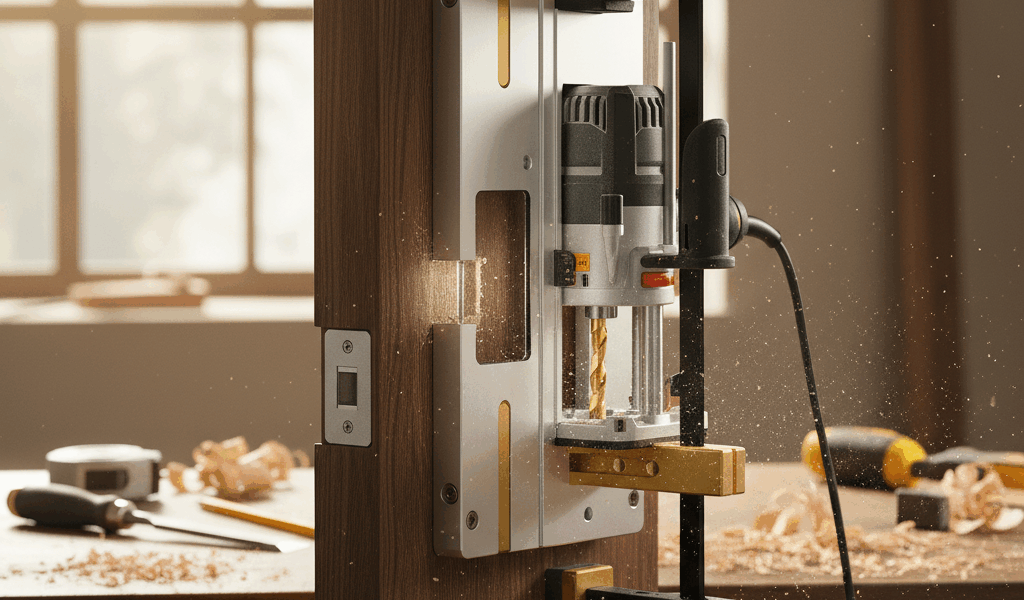
A router with a mortising bit and a straight-edge guide produces a faster and more consistent mortise than hand chiseling, especially on production work. Set the bit depth, clamp the guide, and run the router across the marked area. Still finish the corners with a chisel since routers leave rounded corners and hinges have square ones.
Test Fit and Secure the Hardware
Place the hinge or strike plate in the mortise and confirm it sits flush. Then drive the screws by hand to avoid splitting the jamb with power tool torque. Check alignment before fully seating all screws.
Tips for Success
- Use sharp tools. A dull chisel makes ragged cuts and requires more force — both work against a clean result.
- Practice on scrap first. Cut a test mortise on scrap jamb stock before working on the actual door.
- Don’t rush. Taking too much wood in a single pass is the most common cause of an oversized mortise that needs shimming.
- Check your measurements. The hardware tells you exactly how deep and wide to go — measure it, don’t guess.
One Final Thought
Mortising a door jamb is one of those skills that feels harder than it is until you’ve done it a few times. Get the score lines right, chisel to depth gradually, and test fit before fastening. That’s what makes this kind of work endearing to woodworkers — it’s precise, it’s satisfying, and a well-cut mortise is something you notice every time the door closes properly.
Recommended Woodworking Tools
HURRICANE 4-Piece Wood Chisel Set – $13.99
CR-V steel beveled edge blades for precision carving.
GREBSTK 4-Piece Wood Chisel Set – $13.98
Sharp bevel edge bench chisels for woodworking.
As an Amazon Associate, we earn from qualifying purchases.