Thickness planers have gotten their own brand loyalties and it’s hard to cut through the noise to find what actually matters. As a woodworker who has used several planers over the years, I’ve developed real respect for the Oliver brand — they’ve been making serious woodworking machinery for over a century for a reason. Today, I’ll share everything I know about the Oliver planer.

Understanding the Oliver Planer
A planer’s job is to produce boards of consistent thickness with flat, smooth surfaces. The Oliver Machinery Company has been building planers since 1890, and their reputation for precision and durability has held across more than a century of use. You still find Oliver machines in professional shops that were purchased decades ago and remain in daily service.
Key Models and Features
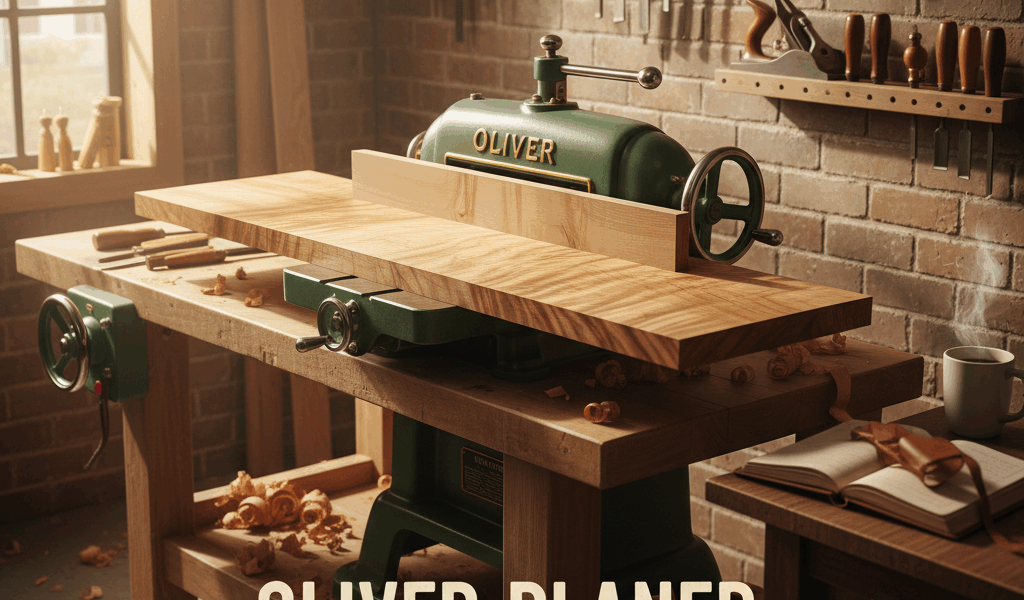
The Oliver 299 and 4240 are the models most woodworkers encounter. The 299 offers a 24-inch cutting width and 8-inch maximum thickness capacity with a powerful motor that maintains consistent speed through the cut. The 4240 is the upgraded sibling — wider board capacity, advanced digital depth settings, and easier knife changes. Digital depth control and tool-free knife replacement set these machines apart from similarly-priced competitors.
Benefits of Using an Oliver Planer
Oliver planers are built for heavy use. The construction is notably robust compared to benchtop planers in the same general price territory. Precision across the width of the cut — uniform thickness from edge to edge — is where these machines earn their reputation.
- Durability. Built to withstand production-level use over decades.
- Precision. Consistent thickness across the full width of the board.
- Efficiency. Fast, reliable output with minimal setup time between boards.
Components and How They Work
The table supports the workpiece as it feeds through. Rollers grip the wood and move it past the cutter head at a consistent rate. The cutter head houses the knives that remove material, and the depth adjustment mechanism sets the final thickness. Keep the rollers clean for consistent feed rates. Sharp knives are non-negotiable — dull knives produce rough, torn surfaces rather than clean cuts.
Setting Up the Oliver Planer
Place the planer on a stable, level surface with enough clearance on both the infeed and outfeed sides for the full board length. Set the depth of cut to a conservative amount — removing less material per pass and making more passes produces cleaner results than trying to take it all off at once. Feed the board in with a steady, even motion and let the machine do the work. I’m apparently a “light cuts, more passes” person and that approach always works better for me while taking aggressive cuts to save time never does — especially on figured wood.
Common Issues and Fixes
Snipe — a deeper cut at the beginning or end of a board — is the most common complaint with any thickness planer. Address it by adjusting the rollers, taking shallower cuts, or using a sacrificial board in front of and behind the workpiece. Rough surface finish usually means dull knives — sharpen or replace them. Feeding problems are almost always caused by dirty rollers; clean them and the issue usually resolves immediately.
Maintenance
Clean the machine after each use — sawdust and chip accumulation affect both performance and longevity. Lubricate moving parts on a regular schedule. Check knife sharpness frequently and replace blades before they start producing rough cuts rather than after. Inspect rollers for wear, check belt tension, and confirm all fasteners are tight. Vibration loosens bolts over time.
Safety
Safety glasses are non-negotiable around a planer — chips and debris travel fast. Hearing protection too; planers are genuinely loud under load. Avoid loose clothing and tie back long hair. Use push sticks for shorter pieces and keep hands well clear of the infeed. Turn the machine completely off and unplug it before any maintenance or knife changes.
Where Oliver Planers Shine
Furniture making, cabinetry, and architectural millwork are natural fits for a planer with Oliver’s precision. For DIY woodworkers, it opens up reclaimed wood — boards that need surfacing before they become usable stock — and custom dimensioning of lumber to exact thicknesses that standard home center lumber doesn’t offer. That’s what makes a quality planer endearing to serious woodworkers: the ability to start with rough stock and arrive at exactly the board you need.
Buying Considerations
Oliver planers require space — account for infeed and outfeed clearance beyond the machine footprint. The upfront cost is higher than benchtop alternatives, but the durability and precision make them a long-term investment rather than a recurring expense. Match the model’s capacity to the widest boards you realistically need to plane.