The lacquer versus polyurethane debate has gotten complicated with all the spray equipment requirements and cure time comparisons flying around. As someone who’s used both finishes extensively on furniture and cabinetry, I have strong opinions about which one belongs in which situation. Today, I’ll share everything I know.
Lacquer and polyurethane represent two different finishing philosophies: fast-drying solvent lacquer versus slow-curing polyurethane. Each has advantages in durability, repairability, and application requirements. Understanding these differences helps you choose the right finish for your project.
Drying Time Comparison
Lacquer dries to the touch in 15-30 minutes and can be recoated within 30-60 minutes. Multiple coats can be applied in a single day. A complete three-coat finish takes 3-4 hours of elapsed time plus application. The finish reaches handling strength within 24 hours and full cure within 48 hours.
Polyurethane requires 4-6 hours between coats for water-based formulas and 8-12 hours for oil-based. A three-coat finish takes 2-3 days minimum. Full cure requires 7-14 days for oil-based poly and 14-21 days for water-based before the surface can handle normal use without marking.
Durability Factors
Polyurethane forms a tough plastic film highly resistant to water, alcohol, and mild chemicals. It withstands daily wear on table tops, bars, and high-use surfaces. The thick film resists scratching and denting better than thinner lacquer coats.
Lacquer is less durable against water, alcohol, and heat. Moisture rings form easily, and alcohol spills damage the finish quickly. The thinner film scratches more easily than polyurethane. For decorative pieces and low-wear items, lacquer’s durability is adequate. For daily-use furniture, polyurethane outlasts lacquer significantly.
I’m apparently a polyurethane person for anything that gets used daily — it works for me on dining tables and desks while lacquer always shows the wear too fast. For display cabinets and decorative pieces, lacquer’s appearance is superior.
Repair and Maintenance
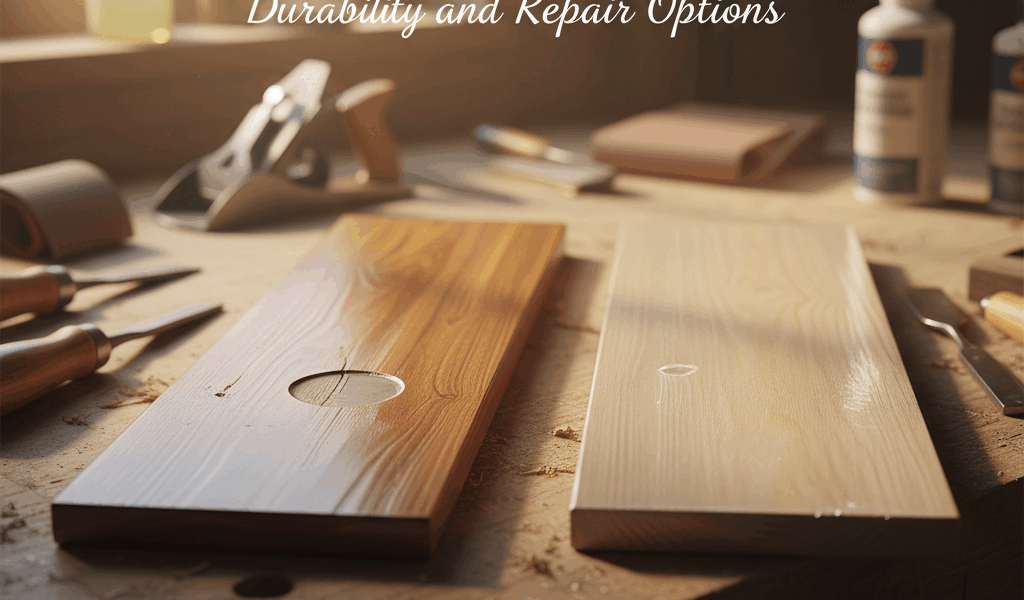
Lacquer’s biggest advantage is repairability. New lacquer dissolves into old lacquer, creating a chemical bond. To repair scratches or damage, you simply apply fresh lacquer — it blends seamlessly with the existing finish. No stripping or extensive preparation needed.
Polyurethane doesn’t bond to itself once cured. Repairs require sanding the damaged area, feathering edges, and applying new poly that bonds mechanically through surface roughness rather than chemically. The repair is more visible and requires more skill to blend successfully.
Application Methods
Lacquer is primarily a spray finish. While brushing lacquer exists, it’s formulated differently and doesn’t offer lacquer’s main advantages. Spraying requires equipment: a spray gun, compressor or HVLP turbine, and ventilation/filtration system. This equipment investment runs $300-1000 for adequate systems.
Polyurethane brushes or wipes on easily with minimal equipment. A quality brush ($15-30) and good technique produce excellent results. Spray application is possible but offers less advantage than with lacquer since poly’s longer dry time makes spray-specific issues more problematic.
Build Speed
Lacquer builds slowly — each coat is thin due to the low solids content and spraying process. Achieving adequate film thickness requires 4-6 coats minimum. However, the fast recoating means all coats apply in one day.
Polyurethane builds quickly — each brushed coat deposits more finish than a sprayed lacquer coat. Two to three coats provide adequate protection for most applications. The slower dry time means the project ties up finishing space for multiple days.
Odor and VOCs
Lacquer contains high solvent levels and releases strong odors during application and drying. The rapid solvent evaporation creates heavy fumes requiring excellent ventilation or respirator use. The VOC content makes lacquer restricted or banned in some areas.
Oil-based polyurethane has moderate odor during application and drying. The slower evaporation creates less intense fumes than lacquer but lingers longer — typically noticeable for 12-24 hours. Water-based poly has minimal odor and lower VOCs, making it suitable for indoor finishing in occupied spaces.
Appearance Characteristics
Lacquer dries to a thin, clear film that enhances wood grain without adding significant color. It maintains clarity over time better than oil-based finishes. The thin film creates a more natural, “close-to-the-wood” appearance than thick poly coats.
Oil-based polyurethane adds amber tones that deepen over time. This warmth enhances some woods (oak, cherry) while distorting others (maple, ash). Water-based poly stays clearer but still adds slight color. The thicker film creates more of a “plastic” appearance — some see this as protective coating rather than natural finish.
That’s what makes the finish selection decision endearing to us woodworkers — it’s the last major choice in a project, and it profoundly affects how the piece looks and how long it stays beautiful. Getting it right requires understanding both what you’re protecting against and what you’re trying to show off.
Cost Analysis
Lacquer costs $25-40 per gallon for quality products. The high solvent content means coverage is lower than poly — roughly 200-300 square feet per gallon for multiple coats. Equipment costs add significantly: $300-1000 for spray setup plus ongoing costs for filters, cups, and cleaning solvents.
Polyurethane runs $30-60 per gallon for quality brands. Coverage is 400-500 square feet per gallon for multiple coats. Equipment costs are minimal: $20-30 for brushes. Total project costs favor polyurethane significantly once equipment expenses are factored.
Skill Requirements
Spraying lacquer requires practiced technique. Gun adjustment, spray patterns, overlap, and application distance all affect results. Beginners produce runs, orange peel, and uneven coverage. Achieving professional results takes practice and possibly wasted material during learning.
Brushing polyurethane is more forgiving. Basic brushing technique produces adequate results immediately. Achieving perfect results requires skill, but acceptable results come easily to beginners. This accessibility makes poly more practical for occasional finishers.
Best Applications
Choose lacquer for:
- Production shops with spray equipment already in place
- Projects requiring fast turnaround
- Fine furniture where repairability matters
- Situations where the thin, natural appearance is preferred
- When you have proper ventilation and safety equipment
Choose polyurethane for:
- Home workshops without spray capability
- High-wear surfaces needing maximum protection
- Finishing in occupied spaces requiring low odor
- When durability outweighs repairability concerns
- Projects where drying time isn’t critical
- First-time finishers needing forgiving application
Hybrid Approaches
Some woodworkers use lacquer for production and poly for high-wear surfaces. Cabinet interiors get lacquer for speed; table tops get poly for durability. This approach optimizes finish selection based on specific requirements rather than using one finish for everything.
Another strategy: use lacquer on pieces where you want natural appearance and easy repair (display cabinets, decorative furniture), and reserve poly for utilitarian surfaces facing hard use (dining tables, desks, kitchen cabinets).
Recommended Woodworking Tools
HURRICANE 4-Piece Wood Chisel Set – $13.99
CR-V steel beveled edge blades for precision carving.
GREBSTK 4-Piece Wood Chisel Set – $13.98
Sharp bevel edge bench chisels for woodworking.
As an Amazon Associate, we earn from qualifying purchases.