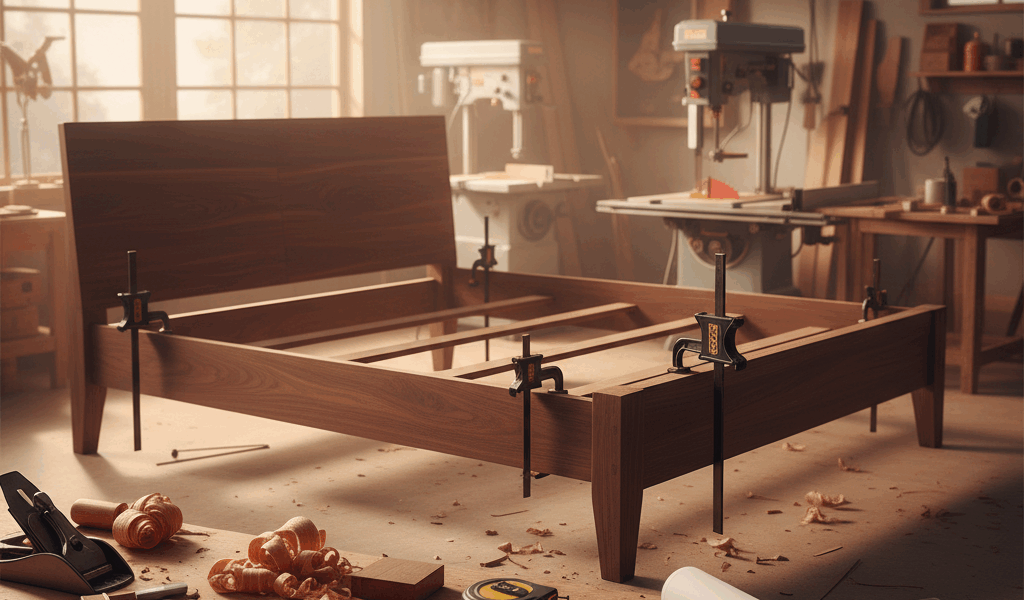
Bedroom furniture has gotten complicated with all the size options and bedding specifications flying around. As a woodworker who has built bed frames, I think about king beds from a construction angle as much as a comfort one. Today, I’ll share what you need to know before committing to a king bed.
King Bed: What You Need to Know Before You Buy
A king bed spans 76 inches wide and 80 inches long — the largest standard bed size available. For two people sharing a bed, it provides enough personal space that one person’s movement rarely wakes the other. Whether that trade is worth it depends on your room, your situation, and whether you’ve actually measured your bedroom.

The Construction Detail Most People Don’t Know
King beds use two twin box springs rather than a single king-size unit. This is a practical engineering decision, not a cost-cutting move. A one-piece king box spring is nearly impossible to navigate through standard doorways and around stairwell landings. The two-twin configuration splits at the center, both halves move through hallways independently, and the king mattress covers the seam entirely. If you’re buying a king bed for a second-floor bedroom, this matters a lot. I’ve seen people get a bed frame and mattress up a staircase and then realize the box spring isn’t following.
The Space Per Person Argument
The reason couples upgrade from a queen to a king is almost always the same: a queen gives each person about 30 inches of width. A king gives each person 38 inches. That eight-inch difference sounds modest until 2 AM when your partner rolls over and you don’t wake up. For restless sleepers or couples with different sleep schedules, that space is real and it’s felt every night.
Single sleepers who want to sprawl have an even stronger case. A king is essentially a twin and a half for one person.
Measure the Room First
The standard recommendation is at least 12 by 12 feet for a king bed with functional space around it. I’d push that to 12 by 14 feet if you have any other furniture in the room at all. A king bed in a 10 by 12 room leaves you shimming past the footboard every morning and the room starts to feel oppressive. Confirm your room dimensions with a tape measure before you start looking at beds. Not approximately — actually measure.
The frame itself adds a few inches beyond the mattress dimensions on each side. Factor that in. Nightstands need clearance. Closet doors need to swing. These things feel obvious until you’re standing in your bedroom wondering how to open the closet.
Bedding Costs Are a Separate Budget Item
King-specific bedding — sheets, comforter or duvet, pillowcases, bed skirt — adds meaningful cost to the purchase. A decent set of king sheets runs $60-150. A quality king comforter starts around $100. These aren’t optional for a bed you’re actually sleeping in. Factor them into the total cost before deciding the frame and mattress are within budget, because the bedding brings the real number up by a few hundred dollars.
California King: Longer, Narrower, Different
The California King is 72 inches wide and 84 inches long — four inches narrower than a standard king but four inches longer. If you’re 6’4″ and your feet hang off an 80-inch mattress, the California King solves that problem. If you’re average height or shorter, you’re trading width for length you don’t need.
California King bedding is not interchangeable with standard king bedding. They use different dimensions and different product codes. Confirm which bed you’re buying before you purchase any bedding, not after.
Before You Go
A king bed is a good purchase for the right room and the right sleeper. Get the room dimensions right first, account for what the bedding will actually cost, decide between standard king and California king based on your height rather than marketing, and then buy the bed. Do it in that order and the decision is straightforward.