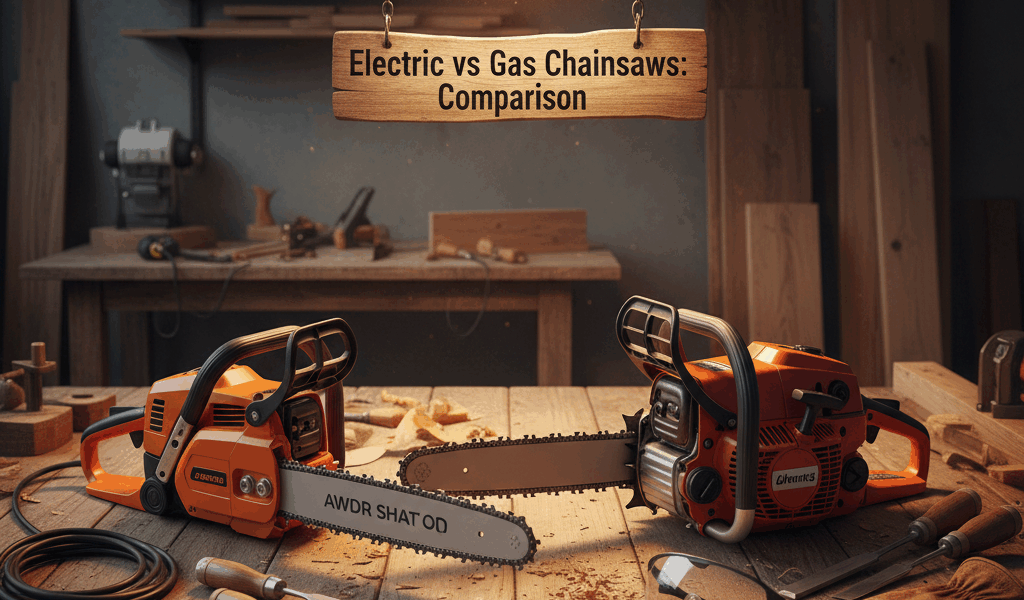
Chainsaw selection has gotten debated with all the cordless options and gas vs. electric arguments flying around. As a woodworker who uses a chainsaw for breaking down logs for turning blanks and clearing fallen trees around the property, I’ve formed clear views on where each type belongs. Today, I’ll share everything I know about electric vs. gas chainsaws.

Electric Chainsaws: The Case for Convenience
Electric chainsaws draw power from a standard outlet (or increasingly from battery packs for cordless models). The instant-on operation and consistent power throughout the run time are genuine practical advantages. For pruning, trimming, and cutting moderate-sized logs in and around a property where power is accessible, a quality electric chainsaw does the job effectively — and the power gap vs. gas has narrowed significantly in recent years.
The noise reduction is real and meaningful in residential areas. Electric chainsaws run substantially quieter than gas models, which matters when working near neighbors or in settings with noise restrictions. No fuel mixing, no carburetor issues, no pull-start on a cold morning — that simplicity has genuine value.
Gas Chainsaws: The Case for Power and Range
Gas chainsaws operate independent of any power source, which is their primary advantage: take them anywhere. Deep in the woods, on a job site without power, clearing storm damage in a remote location — the gas chainsaw goes where electric can’t. Their raw cutting power remains the benchmark for heavy-duty work: large diameter logs, difficult hardwoods, sustained production cutting.
The tradeoffs are real: more noise, exhaust emissions, the need to mix oil and gas correctly, regular engine maintenance, and pull-start frustrations on cold days. I’m apparently a “electric for the yard, gas for the woods” person and that split always works better for me while trying to use one type for everything never does.
Maintenance Comparison
Electric chainsaw maintenance is genuinely simple: keep the bar and chain properly lubricated, check chain tension regularly, and keep the chain sharp. Gas chainsaws add engine maintenance to that list — spark plugs, air filter cleaning, fuel system care, and regular servicing to keep the engine running properly.
Making the Choice
The choice comes down to where and what you’re cutting. For light to moderate work around a home or property with accessible power, an electric chainsaw is quieter, lower-maintenance, and fully capable. For heavy-duty cutting or remote locations, gas remains the more practical choice. Many woodworkers end up with one of each — the electric for convenience and the gas for when the work demands it.