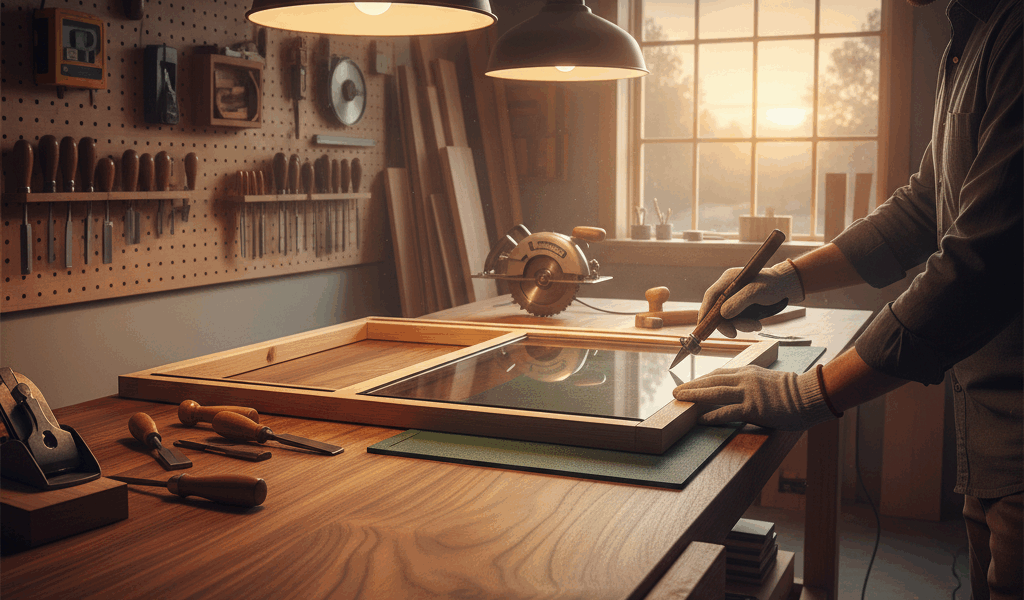
Mastering the Art of Cutting Tempered Glass
Cutting tempered glass has gotten complicated with all the advice and DIY claims flying around. As someone who has worked glass into woodworking projects for years — cabinet inserts, table covers, display case lids — I’ve learned what’s actually possible versus what will leave you with a pile of shards. Today, I’ll share everything I know.

Understanding Tempered Glass
Tempered glass, also called safety glass, goes through extreme heating and rapid cooling. That process makes it roughly five times stronger than regular glass. It’s a huge advantage in applications like car windows and shower doors — and a real obstacle when you need to cut or reshape it after the fact.
The Initial Situation
When the need to cut tempered glass comes up, most people hit a wall. The tempering process makes the glass resistant to direct cutting — attempt it, and you’ll almost certainly shatter the piece into small fragments. This is the expected result, not user error.
The Strategy
The approach that actually works is reversing the tempering process. By carefully reheating the glass and allowing it to cool slowly, you de-stress the material. Once it returns to its annealed state, standard glass cutting methods become viable again.
Safety First
Safety gear isn’t optional here. Before starting anything, put on safety glasses, gloves, and a long-sleeved shirt. Glass shards cause serious injuries, and tempered glass in particular shatters into many small pieces when it goes wrong.
The Steps
- Stage One: Preparation
Mark your intended cut line with a permanent marker. Accuracy matters a lot here. Use a steel ruler for a straight line.
- Stage Two: Pre-Heat Oven
Pre-heat your oven to approximately 900 degrees Fahrenheit. The goal is to heat the glass enough to reverse the tempering without melting it. Ovens vary, so treat that temperature as a starting point.
- Stage Three: Baking
Place the tempered glass in the oven on a ceramic or earthenware tile. Bake for approximately 30 minutes.
- Stage Four: Cooling
Remove the glass from the oven carefully. Let it cool over several hours — this slow cooling, called annealing, allows the glass structure to de-stress and regain its workability. Don’t rush this step.
- Stage Five: Cutting
Once cooled, the glass is ready to cut using standard glass cutting methods. Use a glasscutter with the cutting wheel lubricated with oil. Make a single, continuous score along your marked line. Push excess glass away with pliers. Smooth the edges with fine sandpaper.
Additional Tips
This process is manageable but it’s not a beginner project. It requires patience, precision, and respect for the risks involved. If you’re not confident in the process, consulting a professional glass cutter is money well spent.
For large pieces, work in smaller sections. Handling a large piece of glass through all these steps multiplies the difficulty and the risk considerably.
(I learned the “work in smaller sections” lesson the expensive way. Dividing a large piece into manageable chunks first saves a lot of frustration.)
Working with glass means working with a material that demands respect. Prioritize safety over speed every time.