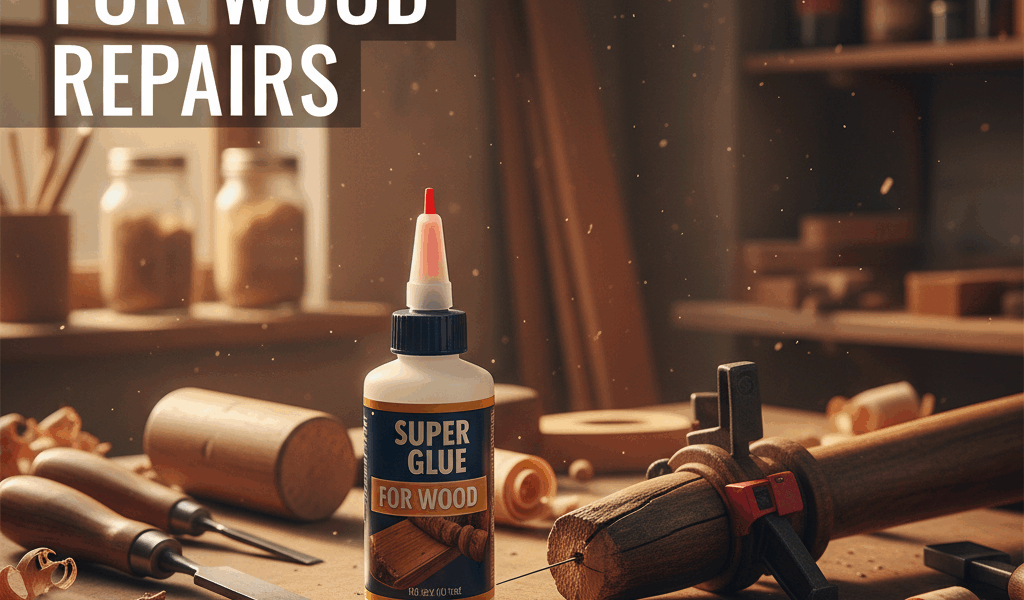
Woodworking adhesives have gotten complicated with all the options and conflicting advice flying around. As someone who has glued up a lot of joints over the years — everything from long grain to end grain to repairs — I’ve developed a clear sense of when each adhesive earns its place. Today, I’ll share everything I know about using super glue on wood.
Super Glue for Wood: The Complete Guide
Super glue — cyanoacrylate adhesive — is widely known for bonding plastic and metal, but its application on wood gets less attention than it deserves. Used in the right situations, it’s one of the most useful adhesives in the shop. Used in the wrong ones, it’s a frustration. Here’s how to tell the difference.

How Super Glue Works
Super glue cures through anionic polymerization — when the adhesive contacts moisture (even the ambient humidity in air or on a wood surface), it rapidly polymerizes and bonds to both surfaces. This is why it sets so quickly and why dry surfaces can actually slow the cure. The chemical composition allows it to adhere to a wide range of materials, including most wood species.
Which Types Work Best on Wood
Not all super glues perform equally on wood. The formulation matters for the application:
- Gel-formula: Less runny, offers better control. The right choice for vertical surfaces, overhead work, or anywhere you need the adhesive to stay where you put it rather than flowing into places you don’t want it.
- Impact-resistant formulas: Designed to withstand vibration and repeated stress. Good for furniture repairs on pieces that flex or take regular loading.
- Thick viscosity: Suitable for filling small gaps and bonding porous end-grain surfaces where thinner formulas would wick in and disappear before curing.
Advantages on Wood
The fast set time is the main advantage in shop work. You don’t need clamps for small pieces — hold the joint for a few seconds and it’s done. That’s genuinely useful when you’re doing fiddly repair work or positioning small components that would be difficult to clamp. Super glue cures clear, sands easily, and takes paint and finish over it without much preparation. The bond is strong in compression and shear for small wood joints.
I’m apparently a “right tool for the right job” person and super glue always works better for me than wood glue on small repairs or precision positioning — while trying to use it as a structural adhesive never does.
Preparing Wood Surfaces
Preparation makes the difference between a bond that holds and one that pops apart. Clean the surface thoroughly to remove dust, oil, and any residue. A cloth dampened with water or mild detergent works well. Let it dry completely before applying adhesive — moisture that you introduced will interfere with the curing process you’re relying on.
Light sanding with 120-220 grit sandpaper improves adhesion by giving the glue more surface area to grab. This is especially important on smooth, dense hardwoods where the surface doesn’t provide much mechanical purchase on its own.
Application
Apply a thin line or a few dots to one surface — less is more. The thin film cures faster and creates a stronger bond than a thick layer that cures on the outside while remaining uncured underneath. Press the surfaces together firmly and hold for a few seconds. For larger pieces, clamp for better contact and alignment.
Excess glue before it cures wipes away with a damp cloth. After curing, scrape carefully with a blade or sand it down — it’s brittle once set and breaks away cleanly from the surrounding surface if you’re careful.
Where Super Glue Excels in Wood Projects
- Repairs: Broken chair rungs, loose joints, small ornaments, split handles. Quick setting makes repair work fast and clean.
- Model-making and small-scale work: Miniature figures, architectural models, and detailed work where clamping is impractical and PVA’s long open time is a liability.
- Crafts and accessories: Custom frames, wooden jewelry, artistic projects where small pieces need to be precisely positioned and quickly secured.
Limitations You Need to Know
Super glue creates a rigid bond. That’s fine for most wood joints, but a problem anywhere the assembly needs to flex — instrument necks, chair backs, anything subject to racking. For flexible joints, polyurethane or epoxy are better choices.
Larger structural repairs need more adhesive mass and longer open time for adjustment than super glue provides. High moisture environments weaken cyanoacrylate bonds over time — outdoor furniture and anything near water should use waterproof alternatives. Know your application before you reach for the bottle.
Safety
Work in a ventilated area — the fumes are irritating in a small, enclosed space. Wear gloves; skin bonding is fast and genuinely unpleasant to deal with. Protective eyewear prevents the worst-case scenario. If you do bond skin, warm soapy water softens the adhesive gradually — don’t pull bonded skin apart. Eye contact means flush with water and seek medical attention immediately. Keep it stored away from children.
Storage
Store in a cool, dry location — a refrigerator extends shelf life noticeably. Seal the cap tightly after each use; even ambient humidity will start curing the adhesive in an open bottle. Store upright to keep adhesive away from the nozzle and prevent clogging between uses.
Super Glue vs. Other Wood Adhesives
Each adhesive in the shop has its application. PVA (wood glue) offers flexibility, a long open time for adjustment, and excellent long-grain bonds — but it’s slow and needs clamping. Epoxy is stronger still, fills gaps well, and is fully waterproof — but requires mixing and is messy. Polyurethane glue expands as it cures, filling voids, but foams out of the joint and requires moisture in the wood to activate. Super glue fills none of these roles but does its own job — fast, small-scale, precise bonding — better than any of them.
One Final Thought
Super glue earns its place in wood shops and on workbenches as a precision repair and small-scale bonding tool. It’s not a replacement for wood glue or epoxy on structural joints, but for the right applications — especially quick repairs and detailed work — nothing works faster or cleaner. Understand the limitations, prep your surfaces, and use the right formula for the job, and it will serve you well.
Recommended Woodworking Tools
HURRICANE 4-Piece Wood Chisel Set – $13.99
CR-V steel beveled edge blades for precision carving.
GREBSTK 4-Piece Wood Chisel Set – $13.98
Sharp bevel edge bench chisels for woodworking.
As an Amazon Associate, we earn from qualifying purchases.