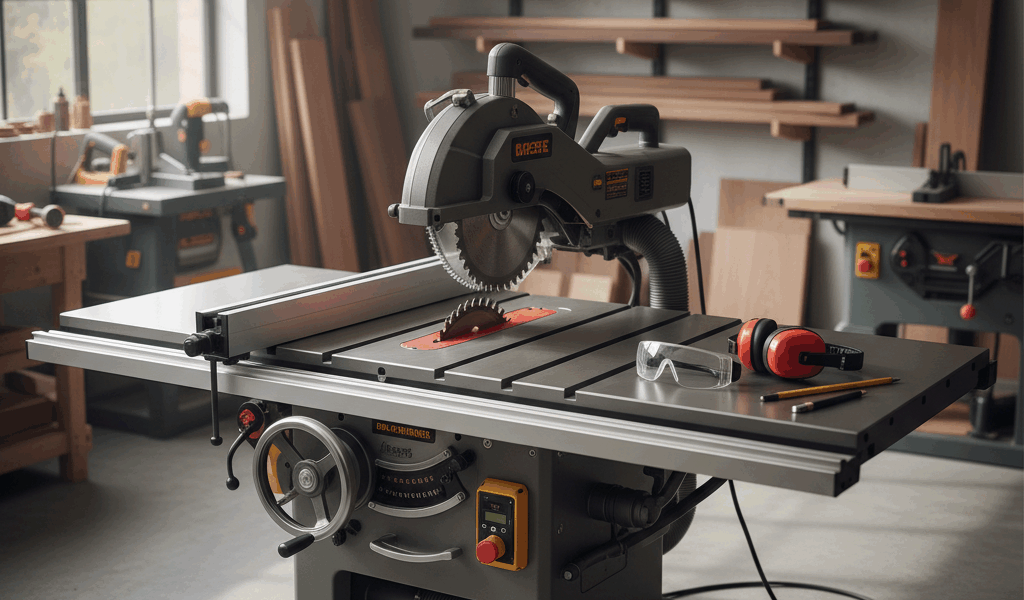
Hybrid table saw selection has gotten complicated with all the new models, feature comparisons, and marketing claims flying around. As someone who’s researched this category extensively, I learned everything there is to know about what makes a great hybrid table saw for home woodworkers. Today, I will share it all with you.
With lumber prices finally stabilizing in 2026 and home woodworking experiencing its biggest surge since the 1970s, the question facing serious hobbyists has shifted from “should I upgrade?” to “cabinet saw or hybrid?” Here’s why the hybrid table saw has emerged as the sweet spot for most home workshops.
The hybrid table saw category barely existed 15 years ago. Today, it represents the fastest-growing segment in woodworking machinery, offering cabinet saw features at contractor saw prices.
What Makes a Table Saw “Hybrid”?
That’s what makes hybrid saws endearing to us home woodworkers—they combine elements from two traditional categories:
From Contractor Saws:
- Single-phase 110V/220V motors
- Lighter weight (250-400 lbs vs. 500+ for cabinets)
- More accessible price points
From Cabinet Saws:
- Enclosed base containing the motor
- Trunnion-mounted blade system
- Superior dust collection
- Heavier cast iron tables
The result: professional-grade accuracy and features without requiring 3-phase power, professional delivery, or a second mortgage.
Best Hybrid Table Saws for 2026
Best Overall: Grizzly G0771Z — $1,195
Probably should have led with this section, honestly. Grizzly’s 10-inch hybrid has dominated the category since its introduction and continues improving:
- Riving knife and blade guard system standard
- 1-3/4 HP motor runs on 110V or 220V
- Camlock T-fence with 30″ rip capacity
- 4″ dust port with excellent collection efficiency
- Weighs 340 lbs—substantial but manageable
Why it wins: Best value-to-feature ratio. Customer support based in the U.S. with excellent parts availability.
Premium Choice: SawStop Contractor Saw (CNS175) — $1,999
Technically classified as a contractor saw, but shares hybrid characteristics and adds life-changing technology:
- Flesh-detecting brake stops blade in milliseconds
- 1.75 HP motor with excellent torque
- 52″ T-Glide fence system available
- Integrated dust collection
- Brake cartridge replacement costs ~$100 after activation
Why consider it: If you’ve ever had a close call, the safety system pays for itself once. Invaluable for shops where children or pets may enter.
Best Budget Option: Jet JPS-10TS — $929
Jet’s entry into the hybrid market offers surprising capability at an accessible price:
- 1.75 HP motor
- 30″ rip capacity
- Poly-V belt system reduces vibration
- Cast iron wings and table
- Lighter at 283 lbs—easier to move solo
Why consider it: Proven reliability from an established brand at the lowest price point for genuine hybrid features.
Best for Small Shops: Laguna F2 — $1,349
Laguna’s compact hybrid maximizes capability in minimal footprint:
- 1.75 HP motor in 110V configuration
- Compact footprint with excellent expansion options
- Integrated mobile base
- European-style safety features
Why consider it: If floor space is your primary constraint, the F2 delivers full hybrid performance in a smaller package.
Key Features to Evaluate
Fence System
The fence makes or breaks table saw accuracy. Look for:
- T-square design that locks parallel to blade
- Solid face (not tubular) for full sheet support
- Microadjustment capability
- Rails that extend for full 4×8 sheet handling (48″ rip capacity)
Upgrade path: Aftermarket fences like the Incra LS or Biesemeyer can transform any hybrid into a precision machine.
Dust Collection
Hybrid saws dramatically outperform contractor saws in dust control:
- Look for 4″ dust port minimum
- Enclosed base should capture 90%+ of sawdust
- Blade guard with dust port captures above-table debris
Reality check: Even the best hybrid needs a proper dust collector—shop vacs don’t move enough air for table saw volumes.
Motor and Power
For home shops:
- 1.5-2 HP handles most operations comfortably
- 110V operation works for most, but 220V reduces amperage draw
- Soft-start motors reduce circuit stress
Hybrid vs. Cabinet vs. Contractor: Decision Matrix
| Factor | Hybrid | Cabinet | Contractor |
| Price Range | $900-$2,000 | $2,500-$8,000+ | $400-$1,200 |
| Weight | 250-400 lbs | 500-800 lbs | 200-350 lbs |
| Dust Collection | Good | Excellent | Poor |
| Accuracy Potential | High | Highest | Moderate |
Who Should Buy a Hybrid?
Ideal for:
- Serious hobbyists building furniture or cabinetry
- Home shops with standard electrical service
- Woodworkers upgrading from jobsite or contractor saws
- Anyone prioritizing dust collection
Consider alternatives if:
- You only do occasional DIY projects (contractor saw sufficient)
- You run a production shop (cabinet saw worth the investment)
- Space is extremely limited (quality jobsite saw may be practical)
The Bottom Line
For most dedicated home woodworkers, a hybrid table saw represents the ideal balance of capability, cost, and practicality. The category has matured significantly, and today’s options offer genuine precision without professional-shop requirements.
Invest in a quality hybrid saw, pair it with a proper dust collector and aftermarket fence if needed, and you’ll have the foundation for decades of satisfying woodworking.
Prices reflect January 2026 retail. Shipping for heavy machinery often adds $100-300; factor this into your budget.


Stay in the loop
Get the latest wildlife research and conservation news delivered to your inbox.