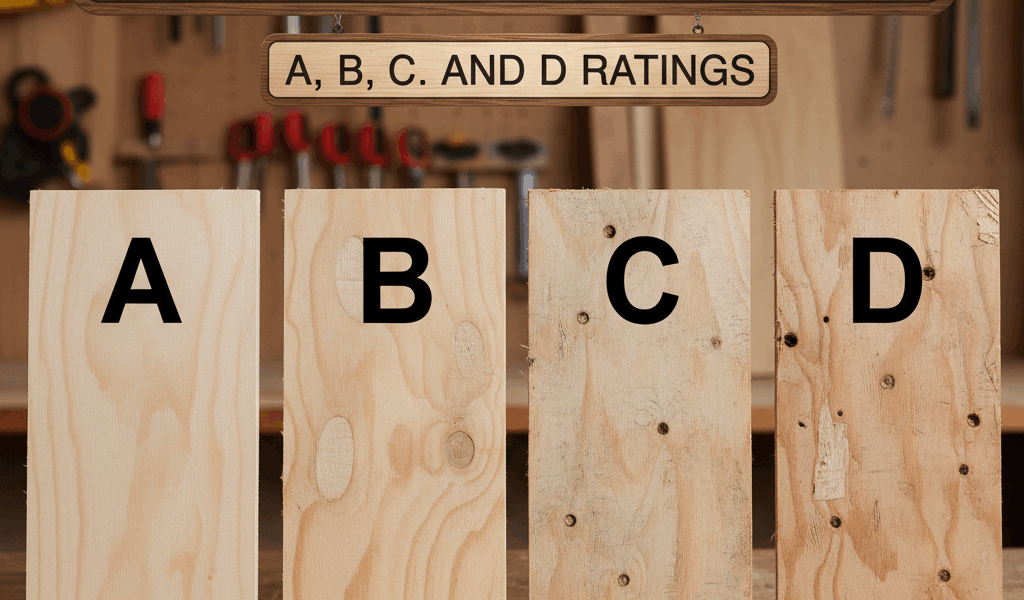
Plywood grades have gotten confusing with all the letter combinations and inconsistent explanations flying around. As a woodworker who buys a lot of plywood for cabinets, shop fixtures, and furniture work, I’ve learned that understanding the grading system saves money and prevents finishing frustrations. Today, I’ll share everything I know about plywood grades and how to match them to your project.
How Plywood Grading Works
Plywood sheets have two faces — front and back — and each face gets its own grade letter, creating combinations like A-B, B-C, or C-D. The first letter represents the better face, the second the back. Understanding this system means you’re not overpaying for premium veneer on surfaces that will be hidden inside a cabinet case or facing a wall.
Grade A: Cabinet and Furniture Quality
Grade A is the highest quality veneer — smooth, sanded, with minimal defects. Small tight knots or minor color variation may be present, but no open knotholes, splits, or patches. This is the face you want visible on cabinet doors, furniture panels, and any surface receiving stain or a clear finish. Grade A accepts finishes without extensive surface prep.
Grade B: Paint-Grade Projects
Grade B veneer has more character — tight knots, minor splits repaired with wood putty, occasional color variation. The surface remains smooth but shows natural defects. For painted projects where minor imperfections are covered by the finish, B-grade is the cost-effective choice. Cabinet interiors, shelving, and backing panels all work well with a B face.
Grade C: Structural Applications
Grade C includes knotholes up to 1-1/2 inches, splits, and discoloration. Football-shaped patches fill larger defects. This grade costs less and requires significant prep work before any finish — it’s the right choice for structural sheathing, subflooring, hidden surfaces, and shop jigs and fixtures. I’m apparently a “C-D for shop furniture, A-B for client work” person and that distinction always works better for me while buying premium plywood for shop applications that nobody sees never does.
Grade D: Utility and Sheathing
Grade D is the lowest veneer quality — large knotholes, splits, rough surface. This grade prioritizes structural integrity over appearance and belongs in roof decking, wall sheathing, and applications where the surface will be completely covered. It provides structural performance at the lowest cost.
Common Grade Combinations
A-A: Both faces premium-quality. Use for cabinet doors, furniture, and any surface where both sides are visible. Highest cost — only pay for it when you need both faces.
A-B: Premium face, paint-grade back. The standard for cabinet cases where the interior gets less scrutiny than the exterior. Good quality-to-cost balance for most cabinet work.
B-C: Paint-grade front, structural back. Built-ins and shelving where only one face shows.
C-D: Sheathing grade. Both faces contain defects but provide structural strength. The lowest cost option for any structural application.
Choosing the Right Grade
The key questions: Will both faces be visible? What finish type — stain reveals defects, paint covers them. What’s the budget — each grade step up increases cost roughly 15-25%. How much prep time do you want to spend — lower grades require more sanding and filling before finishing.
Shopping Tips
Inspect sheets before purchasing even within the same grade — quality varies between manufacturers and batches. Look for void-free edges (indicating quality core construction), consistent thickness across the sheet, and proper storage that kept the sheet flat and dry. When cutting, orient the better face down for circular saws and up for table saws to position the cleanest cut on the visible surface.
One Final Thought
Matching plywood grade to application is how you build quality work without overspending. A-grade faces belong on visible surfaces and high-quality finish work. B for painted projects. C-D for structure, substrates, and shop applications. Get that matching right and you’ll spend your materials budget where it actually improves the outcome.
Recommended Woodworking Tools
HURRICANE 4-Piece Wood Chisel Set – $13.99
CR-V steel beveled edge blades for precision carving.
GREBSTK 4-Piece Wood Chisel Set – $13.98
Sharp bevel edge bench chisels for woodworking.
As an Amazon Associate, we earn from qualifying purchases.
Lower face grades may need defect repair before paint. Use the painted plywood and trim wood-filler guide to distinguish patching filler from grain filler and match the repair to the finish.
After identifying the applicable grade system, compare our maple vs birch plywood guide to see why face species, core construction, face/back grade, and local quotes must be evaluated together.




Stay in the loop
Get the latest crafted wood creations updates delivered to your inbox.