Finishing a butcher block has gotten complicated with all the oil options and conflicting safety claims flying around. As someone who has built and finished butcher block countertops and cutting boards, I’ve learned what actually works for long-term protection. Tung oil keeps coming back as the right answer. Today, I’ll share everything I know about it.
Properties of Tung Oil
Tung oil comes from the seeds of the tung tree and has been used as a wood finish for centuries. The key properties for butcher block use: it’s non-toxic and food-safe, it penetrates deep into the wood rather than just sitting on the surface, and it provides solid water resistance. For a surface where food gets prepared daily, those three things matter a lot.
Application Process
Applying tung oil is straightforward — it just requires patience. Start by cleaning the surface thoroughly with mild soap and water. Remove any dirt, grease, or previous finish remnants. Dry completely. Lightly sand to create a smooth surface that accepts the oil well.
Steps for Applying Tung Oil
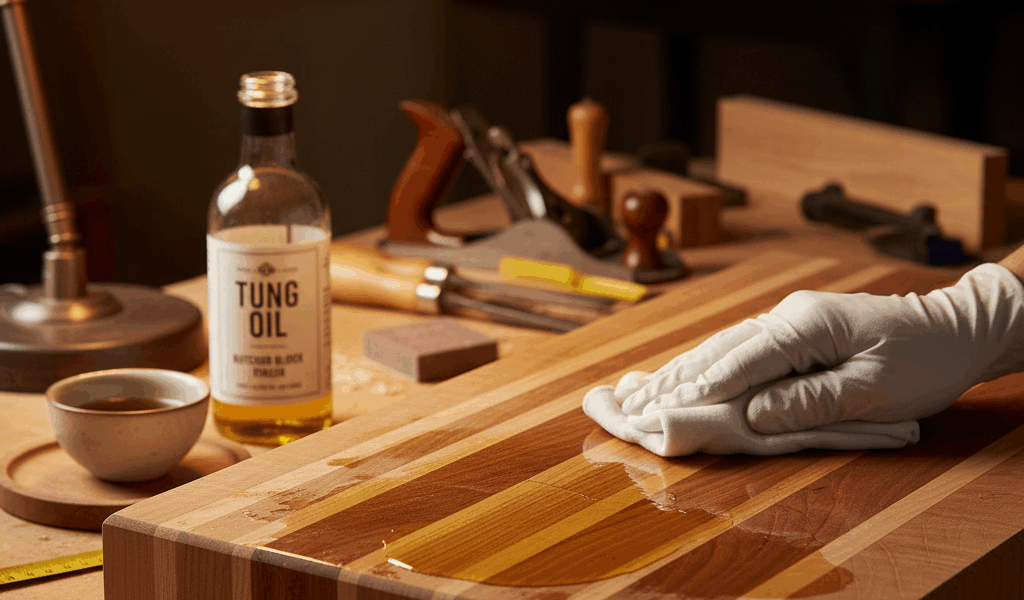
Pour a small amount of tung oil onto the butcher block. Use a lint-free cloth to spread it evenly, working in the direction of the grain. Let it penetrate for at least 30 minutes. Wipe off any excess with a clean cloth — don’t skip this step, excess oil sitting on the surface is where the “sticky” complaints come from. Let the butcher block dry for 24 hours.
Repeat two to three more times. Each coat builds protection. Let each coat dry fully for 24 hours before applying the next. After the final coat, give the block several days to cure before putting it back to work.
(I’m apparently a three-coat person and that build-up works for me, while single-coat applications never give me the durability I want from a daily-use surface.)
Care and Maintenance
A tung-oiled butcher block is easy to maintain. Clean with a damp cloth after each use. Avoid harsh chemicals or abrasive cleaners — they strip the oil finish over time. Reapply tung oil every few months. Sand lightly before reapplication for good adhesion. Spot treatments work well for areas that show heavier wear.
Advantages of Tung Oil
The food-safe, natural composition is the obvious advantage. Beyond that, deep penetration gives excellent water resistance that helps prevent warping and cracking — real concerns on a surface exposed to moisture constantly. The aesthetic side is also genuine: tung oil highlights wood grain and gives a warm, rich appearance that surface-coating finishes can’t match in the same way. The flexible finish accommodates wood movement with temperature and humidity changes without cracking.
Common Misconceptions
The sticky residue complaint almost always comes down to not wiping off excess oil after application — not a product problem, an application problem. The fragility concern is also unfounded when applied properly; tung oil forms a durable surface. And the “difficult to apply” concern doesn’t hold up — the process is straightforward if you’re patient and follow the steps.
Comparisons with Other Finishes
Tung oil dries faster and provides a harder finish than linseed oil. Mineral oil needs more frequent reapplication and doesn’t offer the same water resistance — it’s a decent option in a pinch but not the best long-term choice. Varnishes and polyurethanes create a stronger surface barrier, but they’re not food-safe until fully cured and don’t penetrate the wood. Tung oil threads the needle between penetration and surface protection better than most alternatives.
Buying Tung Oil
Pure tung oil is available in most hardware stores and online. Read the label carefully — some products marketed as “tung oil finish” contain solvents or other ingredients that change the behavior. Buy from reputable suppliers and verify you’re getting pure tung oil. The quality difference is real and shows up in the finished surface.
Potential Issues
Slow curing time is the main drawback. Each coat needs 24 hours to dry; rushing it means the next coat doesn’t bond properly. Regular maintenance is also required — unlike synthetic finishes, tung oil needs periodic reapplication. That’s the honest trade-off for a natural, food-safe finish.
Tung Oil Butcher Block Projects
Applying tung oil to a butcher block is a genuinely satisfying project for anyone getting into wood finishing. The process is accessible for beginners, the results are immediately visible, and a well-finished butcher block becomes a centerpiece in any kitchen. The same technique works on cutting boards, countertops, and wooden utensils — tung oil is versatile across kitchen woodworking projects.
One Final Thought
Tung oil on butcher blocks delivers protection, aesthetics, and food safety in one package. The application is manageable, the maintenance is consistent if not demanding, and the natural properties make it a preferred choice for kitchen wood surfaces. If you’re choosing a finish for butcher block work, tung oil earns its reputation.