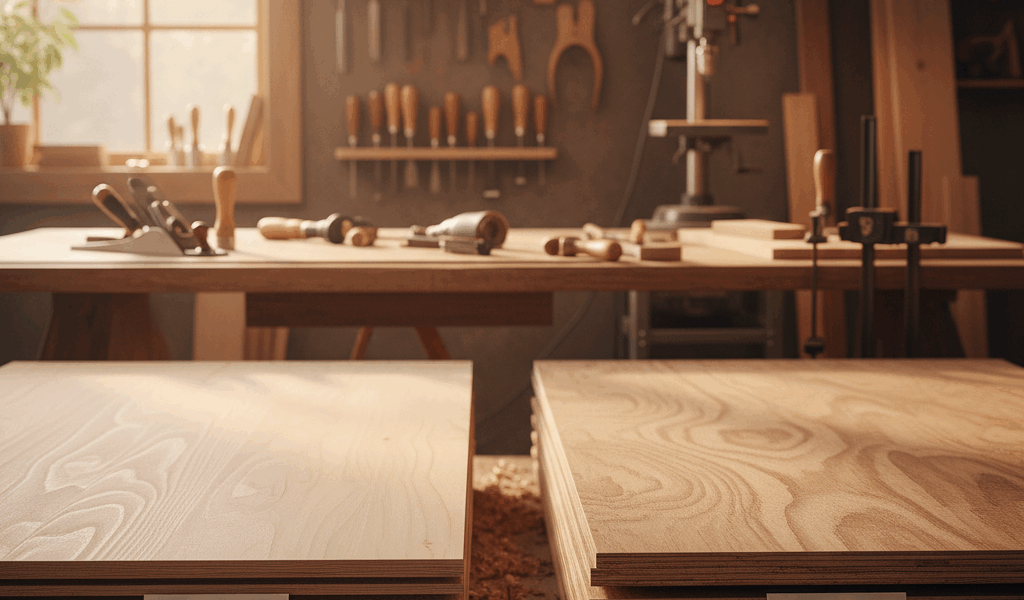
Maple plywood is often more expensive than comparable domestic birch plywood, but that is not a universal rule. A premium multi-ply birch panel can cost more than an ordinary maple-faced panel. Compare sheets with the same thickness, face and back grades, core construction, dimensions, finish, certification, and delivery terms before deciding which species costs more.
For cabinets and furniture, “maple” and “birch” usually describe the decorative face veneer—not the entire panel. The core controls much of the sheet’s flatness, weight, fastener performance, edge appearance, and structural behavior. That distinction matters more than a simple species-versus-species ranking.
Maple vs Birch Plywood: Quick Comparison
| Factor | Maple-faced plywood | Birch-faced plywood |
|---|---|---|
| Typical appearance | Pale cream color, generally subtle grain | Pale to warmer tan, often somewhat more visible color variation |
| Typical price | Often higher than comparable domestic birch | Often lower domestically; premium multi-ply birch can reverse the comparison |
| Painted work | Can provide a clean face, especially on a suitable smooth core | Can also paint well; grade, veneer quality and preparation matter more than the species name |
| Clear finish | Good when a pale, quiet face is desired | Good when slightly warmer color or more variation is acceptable |
| Strength and stiffness | Cannot be ranked from face species alone; compare core, ply construction, thickness, grade, span and manufacturer data | |
| Screw holding | Depends primarily on the core, fastener, edge distance, pilot hole and load—not simply maple versus birch veneer | |
Which Is More Expensive: Birch or Maple Plywood?
For like-for-like domestic decorative hardwood plywood, maple-faced panels are commonly quoted above birch-faced panels. But buyers often compare unlike products:
- a home-center birch-faced softwood-core panel versus a cabinet-grade maple veneer-core panel;
- premium multi-ply birch versus ordinary domestic maple plywood;
- prefinished material versus unfinished material;
- different face/back grades, veneer cuts, thickness tolerances, or sheet sizes;
- local stock versus a special order with freight or minimum quantities.
Those are not species-only price comparisons. Ask each supplier to quote the same written specification and include tax, cutting, delivery, damaged-sheet policy, and lead time. Prices can change faster than a woodworking article, so fixed “cost per sheet” figures are more likely to mislead than help.
A useful quote request
Specify the nominal and actual thickness, sheet dimensions, face species and cut, face grade, back grade, core type, interior/exterior bond or intended exposure, unfinished or prefinished surface, emissions certification, quantity, and delivery location. If the supplier substitutes a product, ask for the manufacturer and product data before approving it.
The Core Matters More Than the Face Species
A thin maple or birch face does not turn every underlying construction into the same panel. Columbia Forest Products’ official hardwood-plywood core guide distinguishes veneer, MDF, particleboard, and combination constructions. Each solves a different problem.
Veneer core
Cross-laminated wood veneers create a relatively light panel with useful fastener performance and familiar plywood edges. Quality and voids still vary by product. For cabinet boxes, shelves, and furniture parts that receive edge fasteners, compare the exact core construction and manufacturer data rather than assuming every veneer core is equal.
MDF core
MDF-core hardwood plywood provides a smooth, uniform substrate and can be attractive for painted or veneered components where surface consistency matters. It is generally heavier than veneer core and needs product-specific fastening and edge treatment. It should not automatically replace veneer core for shelves, long spans, or edge-fastened boxes.
Particleboard core
Particleboard core can provide a smooth, economical, dimensionally consistent panel for suitable interior applications. It is heavier and its fastening, moisture, and edge behavior differ from veneer core. Match hardware and construction methods to the exact product.
Combination core
Combination panels use different layers to balance surface smoothness, weight, machining, and fastener performance. The trade name and technical sheet matter; “combination core” does not describe one universal layup.
Baltic Birch Is a Construction Category, Not a Fair Species Shortcut
“Birch plywood” may mean a birch decorative face over a different core, while Baltic-birch-style material generally refers to a multi-ply panel built from birch veneers through the core. Product origin, sheet dimensions, grades, ply count, thickness, void requirements, glue bond, and availability can vary.
Do not assume any sheet with a birch face has the exposed-edge appearance, core quality, or performance associated with premium multi-ply birch. Likewise, do not assume a high ply count alone proves suitability. Read the manufacturer’s specification and inspect the sheet edges and faces.
Strength: Stop Comparing Janka Numbers
Janka hardness measures resistance to indentation in a wood specimen. It is useful when comparing solid wood surfaces, but it does not establish the bending strength, stiffness, fastener capacity, or shelf sag of a plywood panel. Decorative face veneers are thin; the panel behaves as a layered assembly.
For a shelf, cabinet side, bench, or load-bearing component, evaluate:
- actual panel thickness and construction;
- core species and quality;
- grain orientation of the outer plies;
- span, load, support, edging, and joinery;
- moisture exposure and service environment;
- manufacturer data and applicable design requirements.
APA’s plywood overview is useful for understanding rated structural panels, but decorative hardwood plywood should not be assigned structural ratings it does not carry. If a component is safety-critical or structurally loaded, use an appropriately rated product and qualified design.
Appearance and Finishing
Maple faces
Maple is often selected for a pale, restrained appearance. Natural variation, sapwood/heartwood, veneer cut, matching, and grade still affect the result. A clear finish may warm the color, and pigmented stain can become uneven. Test the entire finish schedule on a representative offcut from the purchased lot.
Birch faces
Birch can range from pale cream to warmer tan and may show more color variation. It can also blotch or change tone under stain. Select and sequence visible panels before cutting when doors, end panels, or furniture faces need a consistent match.
For painted cabinets
The smoothness of the face, veneer defects, core telegraphing, edge treatment, primer compatibility, moisture, and preparation often matter more than whether the veneer is maple or birch. Avoid aggressive sanding through a thin face veneer. Follow the panel and coating manufacturers’ preparation instructions and test adhesion and appearance.
Grades, Faces, and Backs
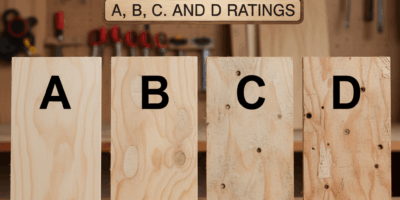
A species name is not a grade. Decorative hardwood panel grades describe allowable face and back characteristics, while structural plywood uses different grading and performance language. Do not treat “A-grade,” “cabinet grade,” or “furniture grade” as complete specifications without identifying the applicable standard and manufacturer.
Our plywood grade guide explains why the stamp, standard, intended exposure, face, back, and panel construction must be read together. When appearance is critical on both sides, specify both faces instead of assuming the reverse will match the front.
Machining and Joinery
- Support the sheet fully. Large panels are awkward and can bind or tip when cut without adequate infeed, outfeed, and side support.
- Use sharp tooling suited to plywood. Face-veneer tearout depends on blade geometry, feed, support, cut direction, and veneer quality—not just species.
- Inspect for voids before joinery. A fastener or dado crossing a hidden void may not behave as planned.
- Test edge screws. Use the fastener maker’s pilot-hole and edge-distance guidance; MDF, particleboard, veneer, and multi-ply cores respond differently.
- Plan edge treatment. Use matching veneer tape, solid edging, a visible multi-ply edge, or another detail appropriate to the core and finish.
- Control wood dust. Use tool guarding, extraction, ventilation, and respiratory protection required for the task and materials.
Which One Should You Choose?
Choose maple-faced plywood when:
- the visible design calls for a pale maple face;
- matching existing maple cabinetry or solid maple edging matters;
- the exact panel’s core, grade, and finish meet the project requirements;
- the quoted premium is justified by appearance or specification.
Choose birch-faced plywood when:
- the selected face color and variation suit the project;
- a comparable domestic birch panel meets the specification at a lower quote;
- a documented multi-ply birch construction provides the edge or core qualities required;
- local availability and replacement sheets are better.
Choose by core, not species, when:
- flatness, weight, edge fastening, shelf span, exposed edges, machining, or surface smoothness is the deciding requirement;
- the face will be painted or hidden;
- two similarly named panels use different internal construction.
If you are comparing solid boards rather than sheet goods, use our separate birch vs maple lumber guide. Solid-wood hardness, movement, board-foot price, and machining are different questions from plywood core construction.
Bottom Line
Maple plywood is often more expensive than comparable domestic birch plywood, but premium multi-ply birch can cost more than ordinary maple-faced panels. Obtain like-for-like local quotes instead of relying on a fixed national sheet price.
For performance, compare the whole panel: face and back grade, veneer cut, core, ply construction, actual thickness, dimensions, bond, finish, certifications, and manufacturer data. Choose maple or birch for the visible face you want; choose the core for the work the panel must do.


Stay in the loop
Get the latest crafted wood creations updates delivered to your inbox.